
Duct Cleaning in Conway, NH
Tell us about your home, and a licensed contractor who covers Carroll County will get in touch.
Tell us about the job
It takes about a minute.

Nine months of heating pushes a lot of dust through those ducts
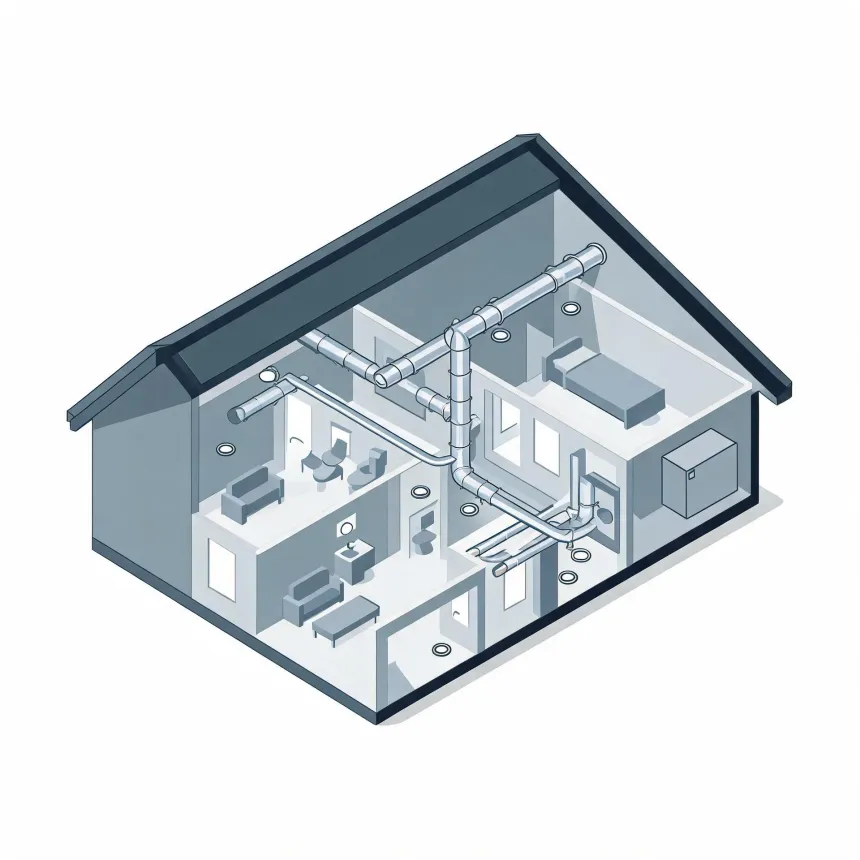
Your furnace runs September through May here, close to nine months a year. That is most of the year spent pulling household air in and pushing it back out through the same ductwork, and whatever dust and pet hair is in the house travels with it, trip after trip.
Winter nights here average 12°F from December through February, so on the cold nights the furnace is cycling often, moving that air through the ducts each time it starts. Dust settles in the same runs of ductwork day after day, and over a heating season that long it builds up enough to coat the inside of the ducts and cut down on the air actually reaching the rooms.
- 9 months
- September through May, your furnace pushes air through your ducts
- 1 months
- July through July, your air conditioner does the same
NOAA nClimDiv, 1991–2020 normals
- How often should air ducts be cleaned?
- A contractor can tell you by looking at what's actually built up inside your ducts, since that varies from house to house. Pets, a recent renovation, or anyone in the house with allergies are all reasons to check sooner rather than later. Outside of those situations, most homes don't need it done often.
- Is air duct cleaning worth it?
- It's worth it if your ducts actually have a buildup of dust, pet hair, or debris, which a contractor can check before you pay for anything. Cleaning won't lower your heating bills or fix a furnace that's struggling, since that's a different problem. What it does is cut down on the dust blowing into your rooms every time the system runs, and with heat needed here from September through May, that system is running most of the year.
- What does air duct cleaning involve?
- A contractor connects a vacuum system to your ductwork, then uses brushes or air tools to loosen dust and debris inside before it gets pulled out. They'll also check the supply and return vents throughout the house, along with the coil and blower compartment where dust tends to collect. A full job covers the whole system, not just the parts you can see.