
Furnace Installation in Dover, NH
A new furnace here will run from October through May every year. Tell us about the house, and a licensed contractor who covers Strafford County will get in touch.
Tell us about the job
It takes about a minute.
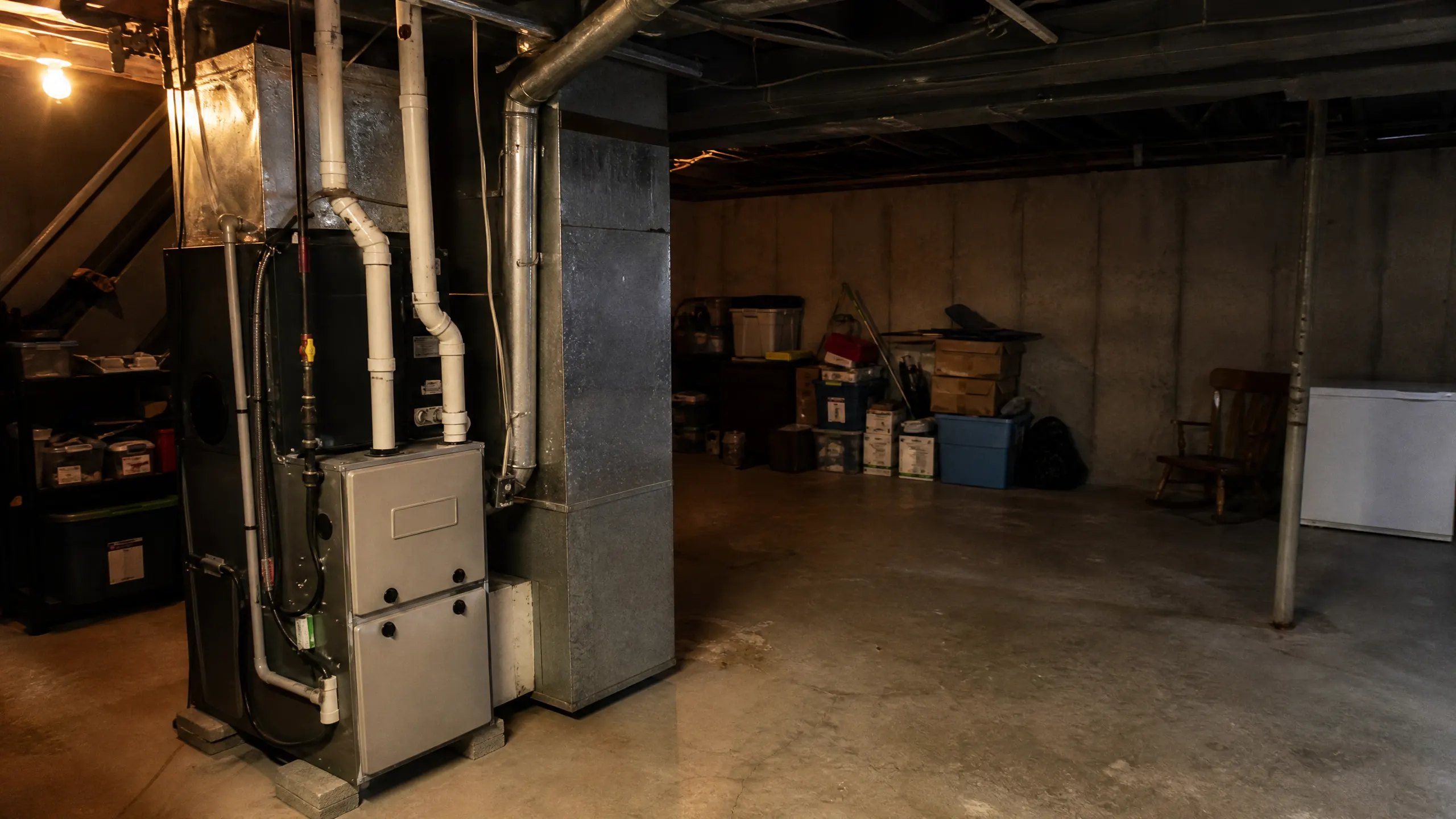
Dover asks a furnace to run eight months a year
Heat goes on in October here and stays on into May. That is eight months of runtime, with winter nights averaging 16°F. A furnace installed in Strafford County has to hold up to that whole stretch, not just the coldest weeks of it.
42.5 percent of homes here heat with fuel oil. Whatever fuel you choose, a new non-weatherized gas furnace built after November 19, 2015 has to reach at least 80.0 percent AFUE. Power is worth planning around too. Strafford County has seen 44 winter storms and 43 damaging wind events over the past ten years, and in 2024, 22 percent of New Hampshire households lost power for 24 hours or more.
- 8 months
- October through May, your furnace is on duty
- 16°F
- the average winter night it heats against
- 80% AFUE
- the federal minimum any new unit must meet
NOAA nClimDiv, 1991–2020 normals
New Hampshire has no state license for HVAC contractors.
There is no license or registration to check here. New Hampshire does not test HVAC contractors or keep a state record of who does this work, so nothing on file backs up a contractor's name before they walk into your house.
In most cities and counties, a furnace replacement needs a permit from the local building office, with an inspection once the work is done. That inspection is where someone other than the installer looks at the gas connection and the venting, since a bad connection there is the dangerous part of a furnace install. Where that permit process applies, it is the only outside check this job gets.
Source: New Hampshire General Court
- What size furnace does my house need?
- The right size depends on your square footage, how well the house is insulated, the windows, and how the ductwork is laid out, so there's no single number that works for every home. A furnace that's too big will short cycle, turning on and off before it heats evenly. One that's too small will run constantly and still struggle on the coldest nights, and with winter lows averaging 16°F here, undersized is the mistake you'll feel first. A contractor sizes it with a load calculation on your actual house, not a guess based on square footage alone.
- How do I know it's time to replace my furnace?
- A furnace that's old, breaking down more often, or heating your rooms unevenly is telling you something. Rising repair costs are a sign too, especially if the same problem keeps coming back. Homes here need heat from October through May, eight months of the year, so a furnace that's struggling has a lot of hours left to prove it before spring. If yours is on its last legs, it's worth having a contractor look at it before it fails on a 16°F night.
- Is a high-efficiency furnace worth it?
- It depends on how many months your furnace runs and what you're replacing. Any new non-weatherized gas furnace sold today has to hit at least 80 percent AFUE by law, so the real question is whether it makes sense to go higher than that. With heat needed eight months a year here, a furnace that runs that much has more hours over its life to make the difference in efficiency worth something. A contractor can walk you through the options for your house and your fuel type, since a lot of homes here still heat with oil.