Mini Split Installation in Claremont, NH
A new system here will heat from September through May and cool from July through July every year. Tell us about the house, and a licensed contractor who covers Sullivan County will get in touch.
Tell us about the job
It takes about a minute.
Claremont winters set the bar for a new mini-split
Winter nights here average 13°F from December through February. A mini-split installed in Claremont has to hold heat on those nights, not just on the mild ones. Summers are short by comparison, with afternoons averaging around 77°F, so the same system spends nine months a year heating and gets asked to cool for only one, July.
Any mini-split built now has to meet the federal minimum for a split-system heat pump, 14.3 SEER2 for cooling and 7.5 HSPF2 for heating. In Claremont, where the heating side of that rating does most of the work, that number is worth asking about before a unit goes in.
- 9 months
- September through May, your system heats
- 1 months
- July through July, it cools
- 13°F
- the average winter night it heats against
- 77°F
- the average summer afternoon it cools against
NOAA nClimDiv, 1991–2020 normals
New Hampshire has no state license for HVAC contractors.
There is no state list of HVAC contractors here, no test they had to pass and no license number tied to their name. Anyone can call themselves an HVAC contractor in New Hampshire and take on a mini-split installation. Nothing at the state level records who did the work or checks that they knew how to do it.
For this installation, most cities and counties require a permit before the work starts and an inspection once it is done. That permit and inspection are local, not a license, and they are what stands between you and the work once the state has nothing to say about it.
Source: New Hampshire General Court
- Is a mini split worth it?
- For most homes here, yes, especially as a way to add heating and cooling to a room that doesn't have it or to replace baseboard heat with something that also cools in July. Nearly half the homes in this area heat with fuel oil, and a mini split gives you an electric option that doesn't depend on that fuel or that delivery truck. With winter lows averaging 13°F, ask the contractor about the unit's low-temperature performance, since not every model is built to keep working at that temperature. A contractor can look at the space and tell you whether it makes sense for your situation.
- How many rooms can a mini split cover?
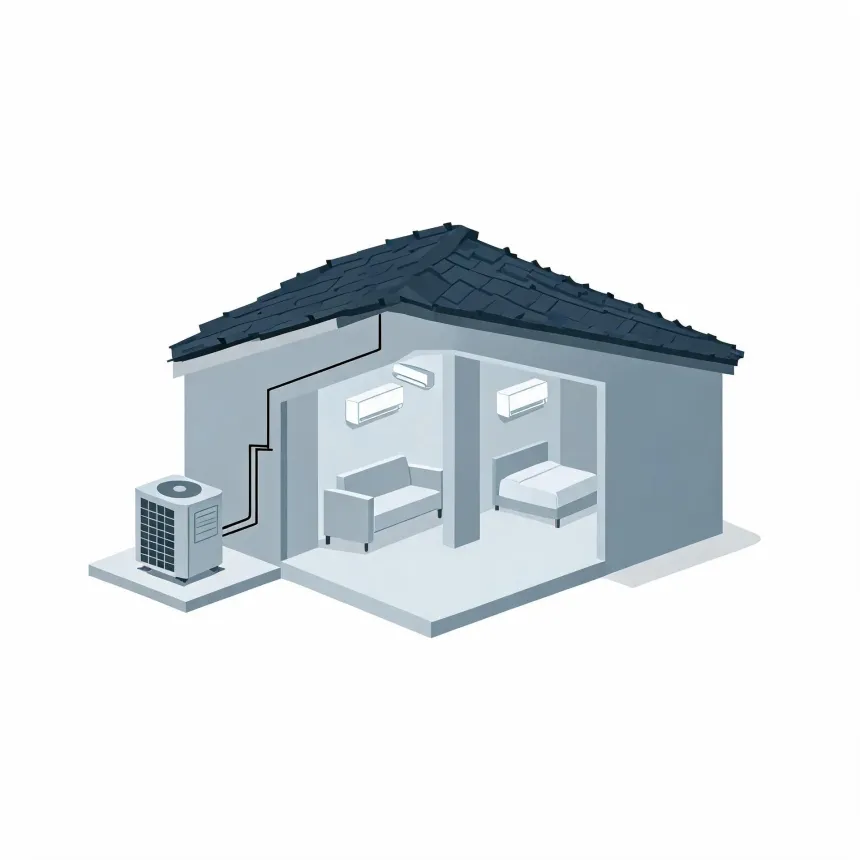
- A single-zone system heats and cools one room or one open area well. If you need more rooms covered, a multi-zone system runs several indoor units off one outdoor unit, and each indoor unit handles its own room with its own thermostat setting. How many zones you can run off one outdoor unit depends on the equipment and on the size and layout of the rooms, so a contractor will need to size it for your house. More zones means a bigger outdoor unit and more install work, so it helps to know upfront which rooms actually need it.
- Can a mini split heat a whole house?
- A multi-zone mini split can heat a whole house if it's sized and placed to cover every room, but that takes planning room by room, not just one indoor unit blowing into a hallway. Homes here need heat from September through May, nine months a year, with winter nights averaging 13°F, so the equipment has to be rated to keep producing heat at that temperature. A contractor can walk the house and tell you what it would take to cover it fully.