Mini Split Installation in Concord, NH
A new system here will heat from September through May and cool from July through August every year. Tell us about the house, and a licensed contractor who covers Merrimack County will get in touch.
Tell us about the job
It takes about a minute.
What a mini-split in Concord has to handle
Concord asks for heat nine months of the year, September through May. Cooling only takes over for July and August. That leaves one month clear of both, so whatever goes on the wall is working almost all the time.
Winter nights here average 14°F, and a mini-split has to keep drawing heat out of air that cold for the whole stretch from December through February. Summer only asks for the reverse job, and asks for it gently, with afternoons averaging 79°F. Any new mini-split also has to clear the federal minimum for split-system heat pumps, 14.3 SEER2 for cooling and 7.5 HSPF2 for heating, so a unit built after 2023 is already held to that standard before it reaches your wall.
- 9 months
- September through May, your system heats
- 2 months
- July through August, it cools
- 14°F
- the average winter night it heats against
- 79°F
- the average summer afternoon it cools against
NOAA nClimDiv, 1991–2020 normals
New Hampshire has no state license for HVAC contractors.
New Hampshire does not put HVAC contractors through a state licensing exam, and it does not keep a state registry of who does this work. There is no state credential to check because the state does not issue one, for this trade or for this job. That is different from a state that tests contractors and keeps a record of who passed. Here, that record does not exist at the state level at all.
For a mini-split installation, the protection in this state comes from elsewhere. In most cities and counties, installing a mini-split needs a permit from the local building office, with an inspection once the work is finished. That inspection is what checks the installation was done right, since New Hampshire has no license standing behind the contractor doing it.
Source: New Hampshire General Court
- Is a mini split worth it?
- For most homes it is, especially if a room runs hot in summer or cold in winter without ductwork to fix it. A mini split heats and cools that space directly, and it can cover more than one room if the house needs it. Concord winters average 14°F on a January night, so ask whoever installs it to confirm the unit is rated to keep heating at that temperature. Some cold-climate models are built for exactly this, others are not.
- How many rooms can a mini split cover?
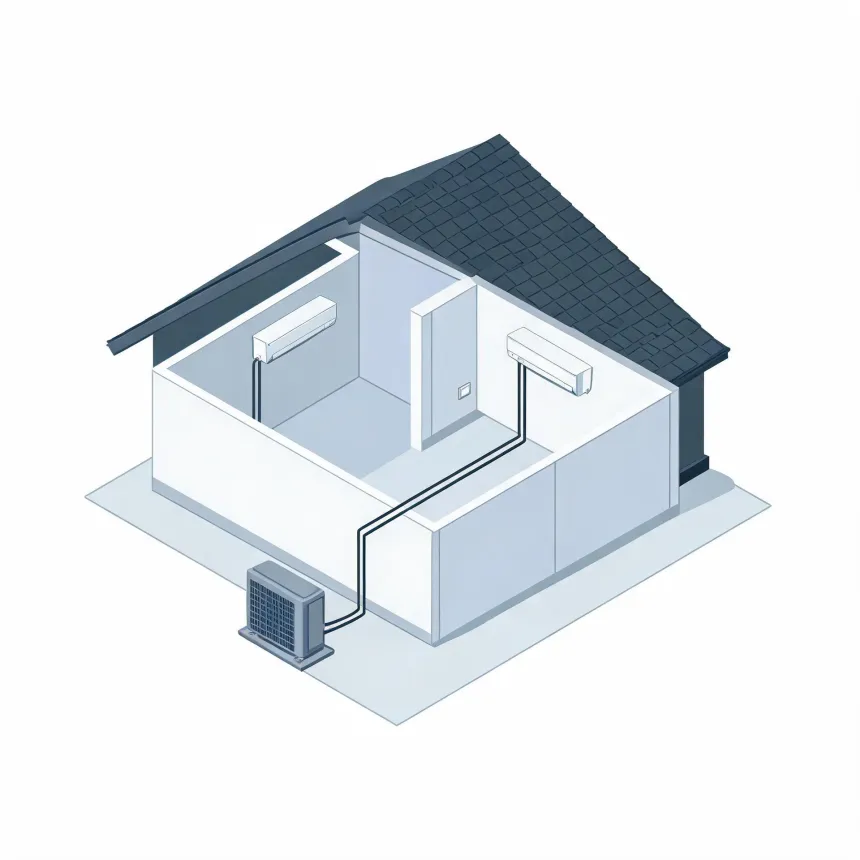
- One outdoor unit can run several indoor heads, each one heating and cooling its own room or zone. How many rooms you actually cover depends on the size of the outdoor unit and the size of each room. A contractor can look at the house and work out how many zones it needs and what capacity each one should be.
- Can a mini split heat a whole house?
- It can, if it is sized and placed for that job from the start. A single indoor head warms the room it is in well but will not carry heat to closed-off rooms down a hall, so a whole-house setup usually means a head in each main room, all run off one or more outdoor units. Homes here need heat from September through May, so if a mini split is the only heat source, it has to be sized for the cold end of that stretch, not the mild end. A contractor can size the system against the house and tell you what it will and will not cover.