
Furnace Installation in Lebanon, NH
A new furnace here will run from September through May every year. Tell us about the house, and a licensed contractor who covers Grafton County will get in touch.
Tell us about the job
It takes about a minute.
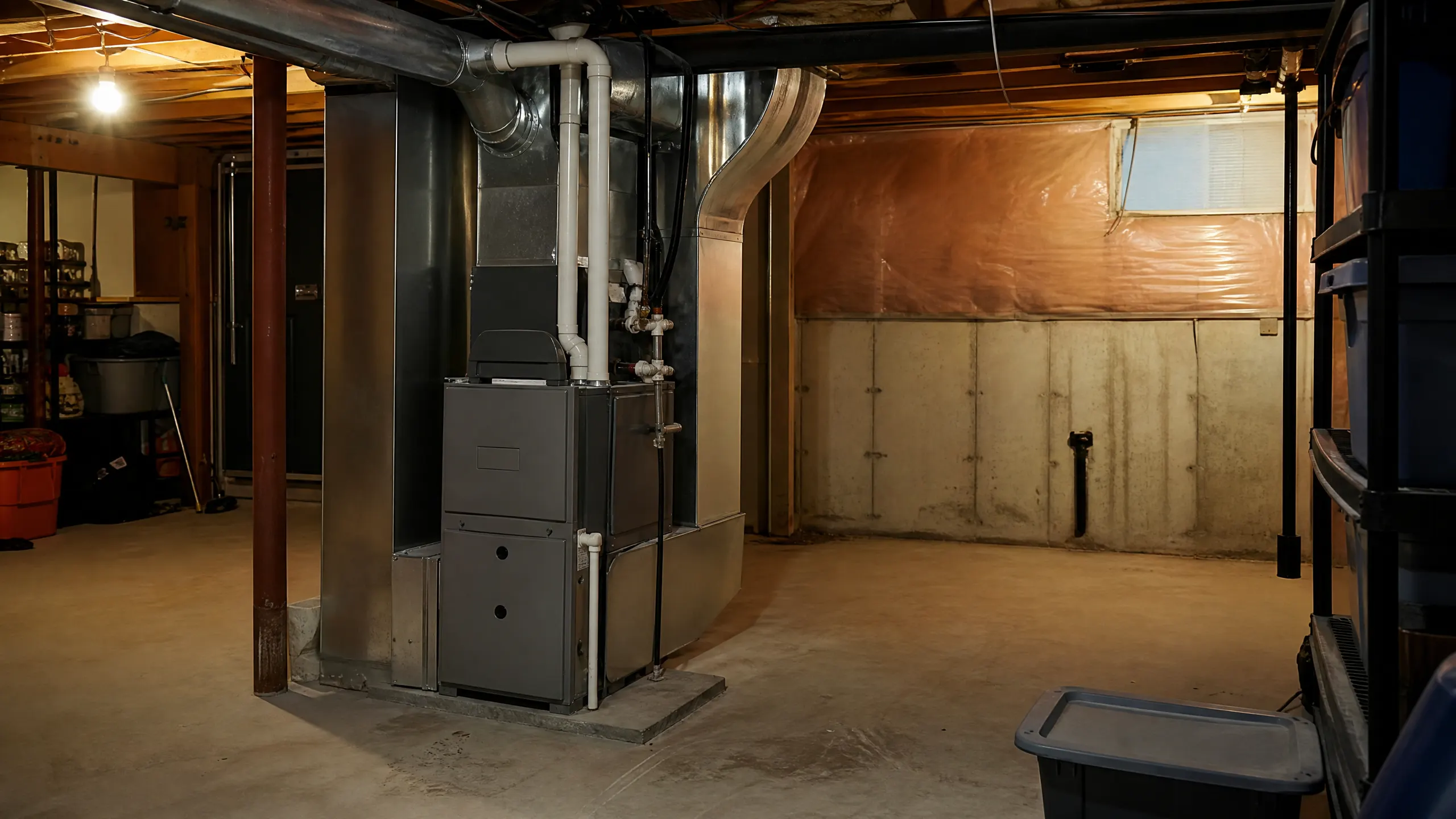
Nine months of heat, and winters that test the system
Your furnace runs September through May here, nine months a year. Winter nights average 10°F. That is a long season and a hard low, and a new furnace has to be sized to hold up through both.
Power is part of the picture too. Statewide, 22% of households went at least 24 hours without power in 2024, and the region has logged 74 winter storms and 133 damaging wind events over the past ten years. If you're installing a gas furnace, federal rules require non-weatherized models built since November 2015 to reach at least 80.0 percent AFUE.
- 9 months
- September through May, your furnace is on duty
- 10°F
- the average winter night it heats against
- 80% AFUE
- the federal minimum any new unit must meet
NOAA nClimDiv, 1991–2020 normals
New Hampshire has no state license for HVAC contractors.
New Hampshire does not register HVAC contractors either, so there is no license number and no state file to check on whoever installs your furnace. That is different from a small-job exemption or an insurance rule carved out of a licensing law. Here there is no licensing law to carve anything out of.
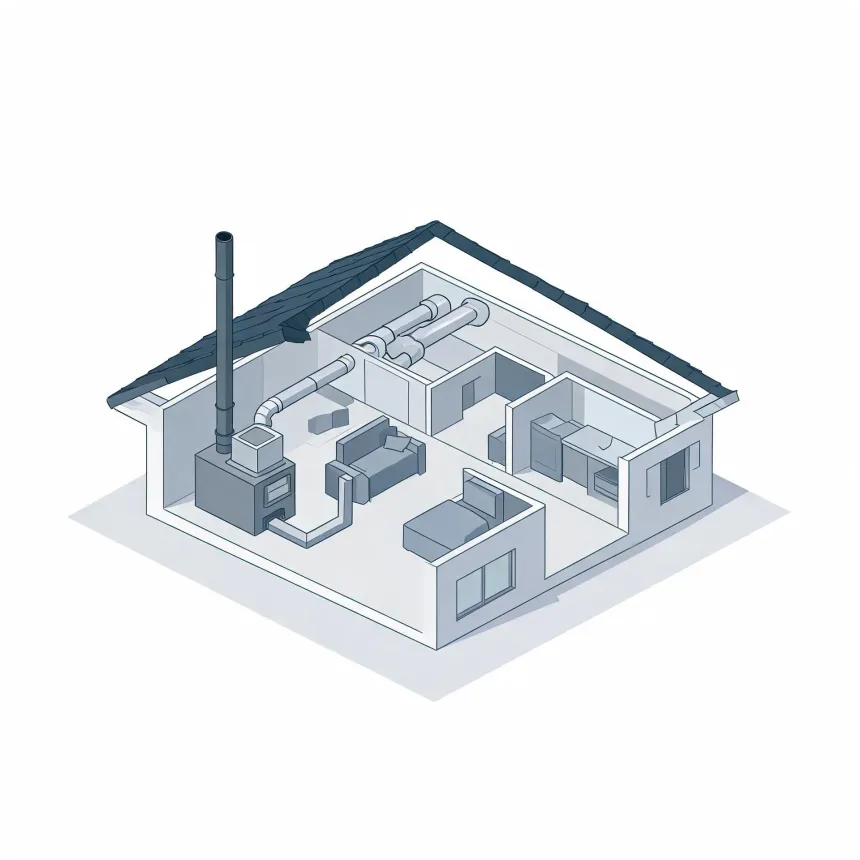
What stands between you and bad work is the permit process. In most cities and towns in Grafton County, replacing a furnace needs a permit from the local building office, and the work gets inspected once it is done. That inspection is what checks the gas connection and the venting, the part of a furnace install where a mistake is dangerous rather than just inconvenient.
Source: New Hampshire General Court
- What size furnace does my house need?
- The right size depends on your home's square footage, how well it's insulated, your window count, and your ceiling height, not on what furnace is in there now. A contractor works this out with a load calculation, room by room, rather than a rule of thumb. Getting this wrong in either direction costs you. Too small and it runs constantly trying to keep up on a 10°F night. Too large and it short cycles and wears out early. Homes here need heat nine months of the year, from September through May, so sizing it right matters more here than somewhere with a short winter.
- How do I know it's time to replace my furnace?
- If it's cycling on and off more than it used to, running longer to reach the same temperature, or the burner flame looks yellow instead of blue, those are signs it's struggling. Rising repair calls on the same unit are another sign, especially if a part critical to running it fails. Age matters too. An older furnace works harder to do what it used to do easily, and with heat needed here from September through May, a failure in the cold months is not a good time to find out it's done.
- Is a high-efficiency furnace worth it?
- Every non-weatherized gas furnace made since November 2015 already has to hit at least 80 percent AFUE, so the question is really whether to go higher than that baseline. A high-efficiency model burns less fuel for the same heat, which matters most where the furnace runs for months at a stretch. That's the case here, with heat needed September through May and winter nights averaging 10°F. A contractor can tell you what efficiency levels fit your home and your venting, since higher-efficiency furnaces vent differently than standard ones.