

Is it time to replace an oil furnace in New Hampshire

Send the form and the search for an installer is over.

Hand it off

A few signs tell you an oil furnace is done. If it's past 20 years old, repairs get harder to justify since parts for older units are tougher to source. If your oil use has crept up while the house hasn't changed, the burner is losing efficiency. Soot around the furnace, a burner that won't stay lit, or a repair bill that keeps coming back for the same problem are all signs the furnace is wearing out rather than having a bad week. In New Hampshire, most homes run on oil, and oil prices move a lot from one winter to the next, so an inefficient furnace costs you more here than it would somewhere on gas. A furnace that's struggled the last few winters usually won't get easier this year. If yours is showing two or three of these signs together, it's worth having someone look at whether to repair it again or replace it.

  1. Oil feeds into the burner and mixes with air for combustion.

  2. The igniter sparks and lights the oil spray.

  3. Flames heat the furnace's heat exchanger.

  4. The blower pushes air across the hot exchanger.

What are you noticing with your furnace right now

You might be hearing it kick on more than it used to, or run longer before the house feels warm. The oil tank empties faster than it did a few winters ago. Some rooms stay cold no matter how high you set the thermostat. You may notice a burnt or oily smell when it starts up, or a puff of smoke from the flue. There could be soot around the furnace door or on nearby walls. The burner might rumble or bang instead of lighting with a steady whoosh. None of this is just annoying. A furnace working harder than it should is burning more oil for less heat, and a cracked heat exchanger or sooted burner can put carbon monoxide into the house.

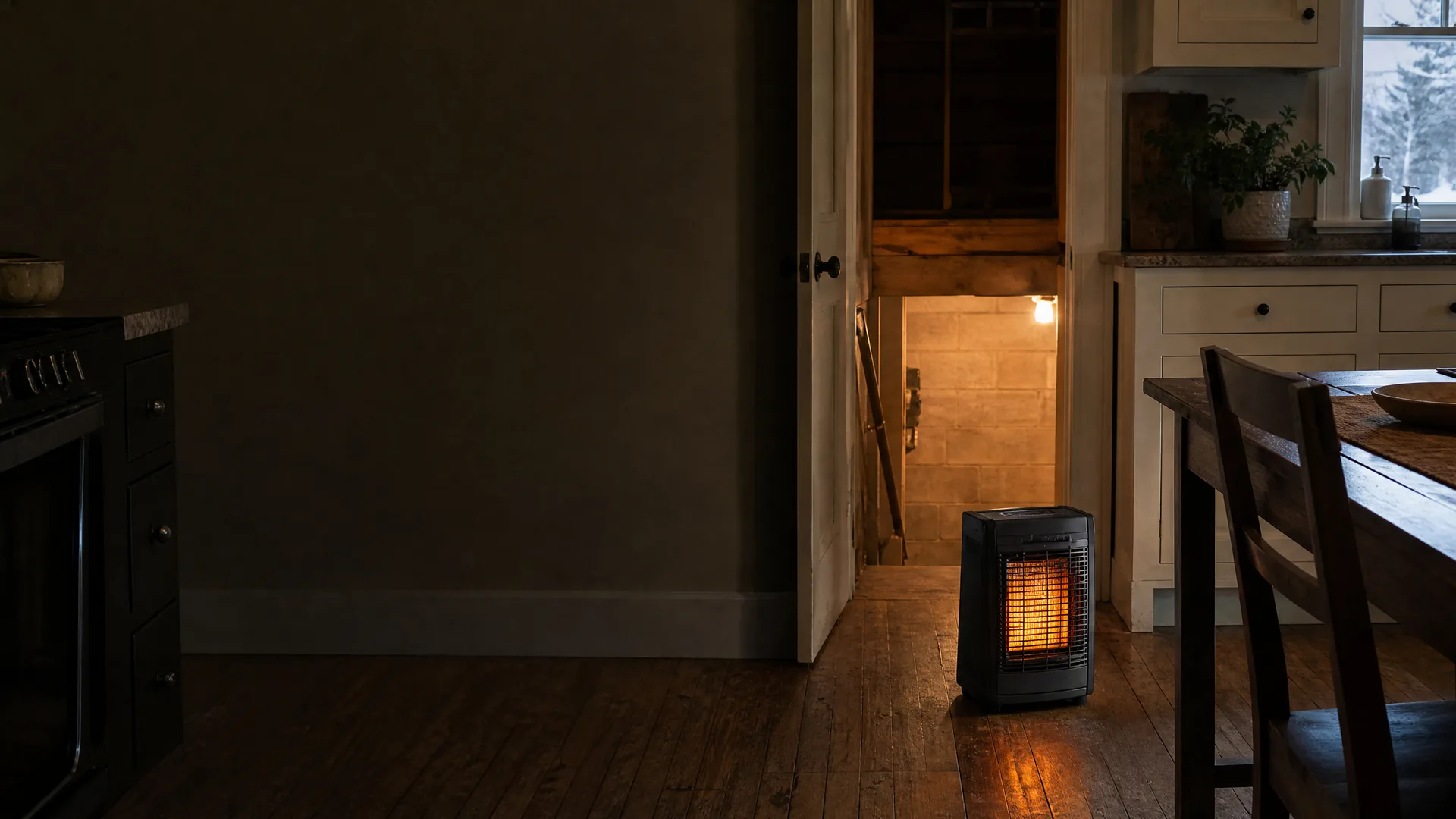
A dimly lit interior with wood plank flooring where a small portable heater with a glowing orange element sits near an open doorway, with a stove at left, kitchen cabinets and a potted plant at right, and a wooden table and chair in the foreground.

It's quarter past six, still dark outside, and the kitchen is the only warm room in the house. You've got the space heater pulled up by the table, its coil glowing orange while you wait on coffee. The basement door hangs open behind it, because you went down twice already to check the burner, and both times it just sat there clicking. Outside the window the thermometer reads somewhere in the teens, the kind of New Hampshire morning where the house usually holds its own by now. Instead you're layered up at your own table, listening for the furnace to catch, wondering if today's the day you call someone before the pipes start to worry you.

Winter nights average 15°F statewide

Fifteen degrees at night is what your furnace is up against for three months straight. At that temperature it isn't cycling on and off, it's running close to constant to hold the house steady. An old burner struggling to keep up shows it fastest on nights like these.

NOAA nClimDiv 1991-2020 county normals weighted by homes

Repairing it one more time

If the furnace is still under 20 years old and the problem is one part, a repair can be the right call. A new igniter, a blower motor, a thermocouple, these are normal fixes and they buy you more winters out of a unit that's otherwise sound. Oil furnaces are built to last, and a tech who services yours every season will know whether this breakdown is the kind that ends with a working furnace by evening, or the kind that's really telling you the unit itself is giving out.


Putting in a new one

If you're replacing a burner every year or the exchanger is cracked, a new furnace stops the cycle instead of extending it. It also means you're not stuck paying to run an inefficient unit through a New Hampshire winter on oil, with electricity rates what they are if you've got backup heat or a hybrid setup. A licensed installer local to you can size the new furnace to your house and have it running before the cold really sets in.

A smiling man in a dark navy sweater sits on a light sofa in a living room, with a glass bowl of popcorn on a wooden coffee table and bookshelves behind him.
A smiling man in a dark green sweater sits on a tan leather sofa in a dimly lit living room, with a bowl of popcorn in the foreground and a kitchen area blurred behind him.
A smiling middle-aged man in a dark shirt sits on a gray sofa in a living room, with a bowl of popcorn on a side table and shelves, a window and kitchen area behind him.
A smiling bearded man in a dark gray t-shirt sits on a gray couch in a living room, with a large glass bowl of popcorn on a wooden table in the foreground.

Send one request and you're done looking

A furnace that's quit on a January night doesn't wait for a quote to think over. Oil heat in New Hampshire runs hard for months at a stretch, and when the burner finally gives out, you're not looking for research, you're looking for someone who can get to it. That's what this is for. Fill it out once and it goes to one local contractor, someone who works on oil furnaces all winter in this state and has seen what twenty-year-old units do before they fail completely. Not five companies calling at once, just the one who actually handles this equipment. You've already noticed the signs, the longer runtimes, the tank draining faster, the cold room that won't hold heat. Sending this off means someone else is carrying the job of finding a contractor instead of you. That weight comes off the second you hit send.

An oil furnace loses efficiency as the heat exchanger ages, so more of the oil you buy turns into heat that never reaches the ducts.

That's oil burning for nothing, and in a state where the power to run a replacement system also costs more than almost anywhere else, an old furnace is an expensive place to lose heat.

An older beige furnace with two louvered vent panels stands on a concrete basement floor, connected to galvanized ductwork and a metal flue pipe, with gas piping and flexible conduit on the wall behind.
Before you get your furnace installation
A beige high-efficiency furnace in an unfinished basement, with white PVC vent pipes, a yellow gas line, metal ductwork, and exposed wood framing on a concrete floor.
After you get your furnace installation

Staying with oil

You know the burner, the sound it makes, the smell of the tank filling. But an aging unit keeps asking more from each gallon, and New Hampshire winters don't give it a break to catch up.

Send my request

Switching to a new furnace

A furnace sized and installed right for your house burns less oil to hold the same heat, and a licensed local installer who works on these units all season handles the sizing and the swap.

Send my request

Repair Again or Replace

Keep repairing it

  • A cracked heat exchanger means replacement, not repair, since that part isn't fixed on site.
  • Oil furnace parts for units over 20 years old sometimes take longer to source, which can stretch a repair into days.
  • If the blower, igniter or burner nozzle have already been replaced once, the next failure is often a different part.
  • Each repair is a known cost for a known fix, which makes budgeting easier than a full installation.
  • A furnace that's otherwise sound can run several more winters on one targeted repair.

Installing a new furnace

  • A new furnace is sized to your house, not patched to keep running at whatever capacity it has left.
  • You stop guessing which part fails next, since nothing on a new unit has 20 years of wear on it.
  • Installation is a bigger bill upfront, but it's one bill instead of a string of repair calls over several winters.
  • A new heat exchanger holds its efficiency, so more of the oil you buy turns into heat in the house instead of heat lost before it reaches the ducts.
  • Local contractors who install furnaces in New Hampshire work on oil systems all winter and size the unit to the house, not just swap what's there.
A gray high-efficiency furnace in a basement, connected to sheet-metal ductwork on the left and white PVC vent pipes above, with black gas and drain piping and an exposed wood-stud wall with OSB sheathing on the right.
A furnace like this one is sized right and venting clean, with nothing asking more of a gallon of oil than it should.
An older gas furnace with two louvered front panels stands on a concrete basement floor beside galvanized sheet-metal ductwork, pipes, and a weathered concrete wall.
Rust and moisture staining on the floor and walls mean the unit has been sitting wet for a while, and that's not a problem one part fixes.
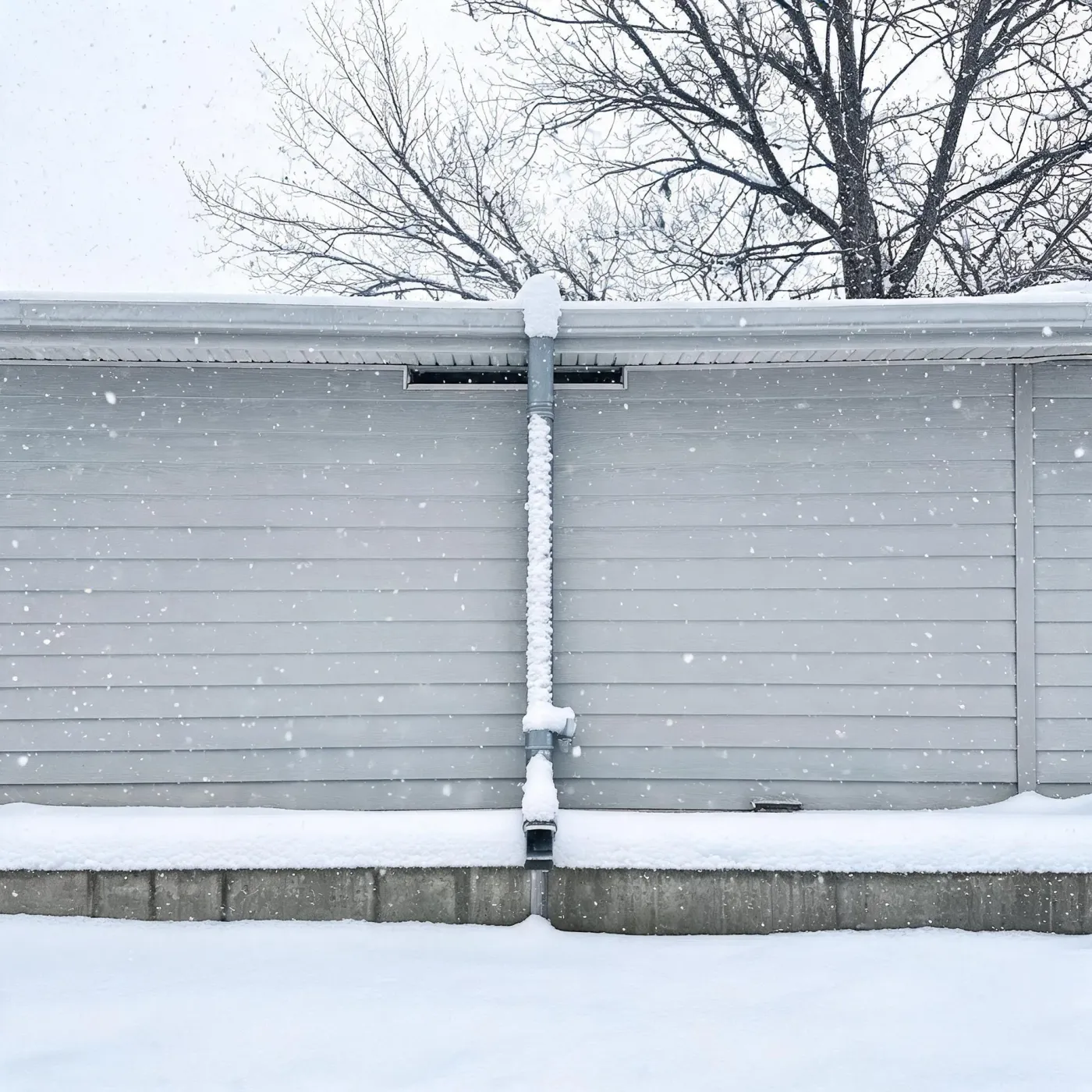
Exterior wall of a building with light gray horizontal siding and a snow-covered downspout running down its center, with bare trees behind the roofline and falling snow over deep snow on the ground.

Winter nights average 15°F statewide, according to NOAA climate data. At that temperature your furnace isn't cycling, it's running close to flat out just to hold the thermostat setting. A unit that's aging shows it fastest at 2 a.m. when it's coldest and the burner has nothing left in reserve. You might notice the supply air feels cooler than usual, or the furnace runs longer stretches without shutting off. That's the burner working harder for the same result, and it's the kind of strain that finds whatever part in the system is already weak.

NOAA nClimDiv 1991-2020 county normals weighted by homes

A woman with dark hair in a bun reclines on a sofa with her eyes closed, wrapped in a cream fleece blanket, a closed blue hardcover book resting in front of her, with a lit lamp and a vase of dried flowers in the background.
A smiling bearded man in a navy sweater sits at a candlelit dinner table with a glass of red wine, a bowl of salad, and plates of food in the foreground.

Where Your Furnace Stands

  • An oil furnace past 20 years old with climbing oil bills and a cracked heat exchanger is done, not fixed.
  • A furnace under 20 years old with one failed part, like a blower motor or igniter, is usually still worth repairing.
  • New Hampshire winters run cold enough that a struggling furnace shows its age fastest on the worst nights of the year.
  • A local contractor who services oil furnaces all winter has likely seen your exact model fail the same way before.
  • Working with one licensed local contractor means one call, not a string of competing bids and callbacks.
  • Whichever way the furnace points, you now know enough to call it instead of guessing through another cold snap.

You came here with a furnace that's either worth one more winter or isn't, and by now you have a good sense of which. Age past 20 years, oil bills creeping up, a cracked heat exchanger: those point one way. A single failed part on a younger unit points the other. Either answer is useful, because guessing is what costs you a cold night in January.

What happens next matters as much as the answer itself. A furnace that's run on oil through New Hampshire winters for years doesn't fail in some unusual way. A contractor who's local and services these units all season has likely already seen your model do exactly what yours is doing, whether that's short-cycling, soot around the access panel, or a blower that won't shut off. That kind of familiarity means less time spent figuring out what's wrong and more time fixing it.

It also means one contractor, not several. You get matched with someone licensed and local, so you're not fielding calls from four companies trying to win the job. One person comes to look at your furnace, tells you what they find, and you decide from there.

Whether the right move is a repair or a replacement, you're not stuck wondering anymore. The furnace in your basement will either make it through another winter or it won't, but now you know what to look for and who to call when it's time to stop guessing.

A gray high-efficiency furnace with two access panels stands on a concrete basement floor, connected to sheet-metal ductwork and white PVC vent pipes, with wood framing and a gas line nearby.

Let someone else find the pro

New system or replacementFurnace or heatingNew Hampshire
Step 1 of 2

What ZIP code is the job in?