
A quick burn-off smell
The furnace fires, you catch a trace of oil for a minute, then it's gone. The flame has settled and the burner is running clean. This is the smell a lot of New Hampshire homeowners notice on the first cold start of the season.
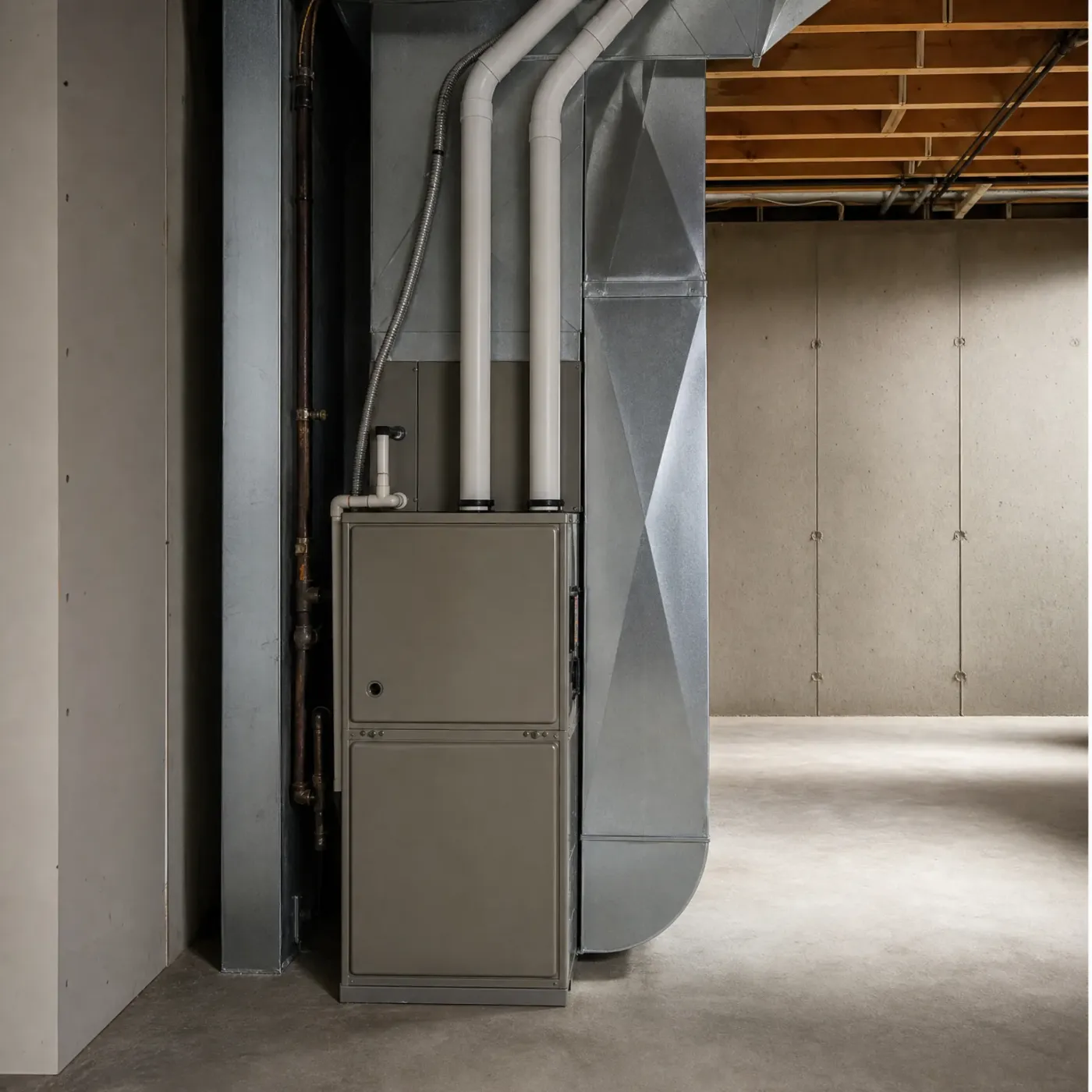
A faint oil smell when your furnace starts up usually means a bit of oil didn't catch fire right away and burned off as fumes instead. That happens with a dirty or worn nozzle, a cracked heat exchanger, or soot built up in the burner chamber. A smell that lingers, or comes with black dust near the unit, points to incomplete combustion, and that's worth having checked since it means the oil isn't burning clean. With most homes in New Hampshire heating with oil, this is one of the more common calls a tech gets this time of year. A sharp smell that doesn't fade, or any headache or dizziness along with it, means shut the furnace off and get it looked at before running it again. Most of the time it's a straightforward fix like a nozzle swap or a cleaning, but it's not something to leave alone through a cold stretch.

The furnace fires, you catch a trace of oil for a minute, then it's gone. The flame has settled and the burner is running clean. This is the smell a lot of New Hampshire homeowners notice on the first cold start of the season.

The furnace keeps putting off oil fumes well after startup, or the smell shows up every cycle. That points to a nozzle that needs cleaning, a crack in the heat exchanger, or soot built up where the burner fires. It needs a look before you run it again.




Your furnace runs on timing. The igniter sparks, the oil valve opens, and the spray catches fire within seconds, in that order, every cycle. Each part along the way has one job, and if any of them is off, some of that oil doesn't burn clean.
The nozzle's job is to turn liquid oil into a fine mist, fine enough to ignite fully on contact with the flame. A worn or clogged nozzle sprays unevenly instead, and the coarser droplets don't catch the way they should. The burner fan is supposed to mix air into that mist in the right ratio. If the blower wheel is dirty or the air shutter is closed down too far, there isn't enough air to burn the fuel completely, and some of it goes out as vapor instead of flame.
Ignition itself can lag by a second or two. In that gap, oil pools in the burner chamber before it finally lights. That pooled fuel is what you're smelling when a cold start gives off a stronger odor than usual. Over time, soot from incomplete burns collects on the burner and chamber walls and holds onto oil residue, releasing a bit of smell every time the furnace fires.
The heat exchanger is what keeps all of this separate from the air moving through your ducts. It's built to let heat pass through to that airstream while keeping combustion gases on the other side, headed up the flue. A crack in it breaks that separation, and that's a different problem than a dirty nozzle or soot.



Explain the job once and skip repeating it on every call.
Send it once and finding someone is no longer on you.
No fee to send it, and nothing to sign.
You might catch it in the basement first, then notice it drifting up through the vents into the kitchen or bedrooms. Some homeowners describe it as a greasy, diesel-like smell that clings to a room even after the furnace stops running. Others see a thin haze of soot around the burner door or smell it stronger whenever the furnace kicks on after sitting off for a while. If the smell lingers past the first few minutes or shows up every cycle, it usually means oil is burning incompletely somewhere inside the unit. Left alone, that unburned oil leaves soot on the heat exchanger, and a cracked exchanger can let combustion fumes mix into the air moving through your ducts.

Oil that doesn't burn clean leaves soot on the heat exchanger and inside the burner chamber. That layer acts like insulation, so the metal underneath runs hotter than it should. Over time that heat stress is what cracks a heat exchanger. A furnace running with a quarter inch of soot buildup can lose a real share of its efficiency, which matters more here with New Hampshire's oil and power costs than almost anywhere else.

Your furnace draws combustion air from the space around it, and if that space is the basement, fumes from an unburned trace of oil get pulled right back toward the blower. From there the duct system moves that air to every room on the system, not just the ones near the furnace. That's why a smell that starts as a basement problem shows up in a bedroom two floors up within a few minutes of a cold start.
The igniter sparks and the oil valve opens
The nozzle sprays oil into a fine mist
The spray ignites and the burner flame settles
Heat passes through the exchanger into your ductwork


On winter nights here, the air dropping to 15°F is normal, and your furnace is running long stretches to keep up. That's more hours for a worn nozzle or a sooty burner chamber to keep putting off that oil smell instead of burning clean.
NOAA nClimDiv 1991-2020 county normals weighted by homes

An oil smell that fades after startup is normal. One that lingers, or shows up mid-cycle, means the burner isn't running clean, and that points to a nozzle, a sooty chamber, or a heat exchanger worth checking before winter asks more of it. You don't need to know which one it is. You just need someone who can look.
That's the part a contractor sorts out once you send the form. You won't be calling three oil companies, describing the smell each time, then weighing quotes against each other while the smell keeps coming back. Send it once, and finding the right person to look at your furnace stops being something you have to manage yourself.

Skip searching for a furnace pro and answer a few questions instead.
Sending the form costs nothing.