













Profile view of a bearded man wearing a black baseball cap and a dark gray T-shirt against a plain light background.

Why your furnace whistles in New Hampshire

RepairFurnace or heatingNew Hampshire
Step 1 of 2

What ZIP code is the job in?

A whistle usually means air is squeezing through a space too small for it. Most of the time it's the filter, clogged enough that the blower has to pull air through whatever gaps it can find, and those gaps whistle. It can also come from a duct joint that's worked loose, a return vent that's partly closed or blocked by furniture, or a crack in the duct itself. With oil furnaces, which is what most houses around New Hampshire run, the blower still works the same way, so a dirty filter causes the same whistle it would anywhere else. The sound itself won't damage the furnace, but it's telling you the blower is working harder than it should, and that shows up on your electric bill since the blower motor runs on power even when the furnace itself burns oil. Left alone, whatever is restricting the airflow usually gets worse, not better.

A beige residential furnace stands on a concrete basement floor beside galvanized sheet-metal ductwork, a round flue pipe, copper gas piping, and a PVC condensate line, with a wood-paneled wall at right.
Before you get your furnace repair
A gray high-efficiency furnace in a basement with white PVC vent pipes, sheet-metal ductwork, copper and black piping, a condensate pump, and insulated walls above a concrete floor.
After you get your furnace repair

Is that whistle something to worry about?

You probably notice it most when the furnace first kicks on, a thin, high sound coming from somewhere near the unit or a vent down the hall. It might fade once the house warms up, or it might run the whole cycle. Check your filter first. If you haven't looked at it in a while, pull it out and hold it to the light. A furnace straining to pull air through a blocked filter has to work harder to push heat through the house, and with oil heat and New Hampshire power rates, that shows up on your bill before it shows up as a real problem. Left alone long enough, the same strain can wear on the blower motor, and that's a repair, not a filter swap.

  1. Air gets pulled fast through a narrow gap and starts to whine

  2. A dirty filter forces the blower to work harder than it should

  3. That strain pulls air through small gaps around the filter slot

  4. Air moving through those gaps vibrates and makes the whistle you hear

A woman with long wavy brown hair in a grey ribbed sweater sits on a couch indoors, looking toward a window, with a potted palm-like plant and fireplace behind her.
A woman with long brown hair wearing a green V-neck top and beige cardigan sits on a light sofa, looking off to the side, with a dining table, lamp and framed picture in the background.
A woman with long dark hair in a cream knit sweater sits on a beige sofa indoors, looking toward a bright window with a houseplant and framed picture in the background.
A woman with long dark hair in a green knit sweater sits on a couch indoors, smiling and looking toward a window with a blurred room behind her.

Start at the furnace door. If the panel isn't seated right against its gasket, air gets pulled past the edge instead of through the return, and that gap whines before the filter ever gets blamed. Check the vents and grilles around the house too. A rug pulled over a return, or a couch pushed against one, narrows the opening the blower has to work with, and the whistle shows up right there instead of at the unit. Startup is its own case. The blower ramps up to speed before air is moving freely through the ducts yet, so you'll hear a short whistle that settles once airflow catches up. None of this cares whether you're running oil or gas. The blower motor runs the same either way, so a dirty filter or a blocked return whistles the same regardless of what's firing the burner. And if the sound is coming from one vent down the hall rather than the furnace itself, look at the damper behind it. Nearly closed, it does the same thing a clogged filter does on a smaller scale.

Where the sound actually starts

  • A clogged filter is the most common cause, but a whistle near the furnace door often points to a loose panel that isn't sealing against its gasket.
  • Return air grilles that are partly blocked by furniture or rugs force the blower to pull harder through the remaining opening, and that's where the sound shows up.
  • A whistle that only happens on startup usually traces to the blower ramping up before enough air is moving through the ducts yet.
  • Oil furnaces here run the blower on the same schedule as gas ones, so a dirty filter causes the same whistle regardless of fuel type.
  • If the sound comes from a specific vent rather than the furnace itself, the damper behind that vent may be nearly closed.
  • A whistle that gets louder over several weeks usually means the filter is getting dirtier, not that something failed suddenly.
A gray high-efficiency furnace stands on a concrete basement floor beside galvanized sheet-metal ductwork, white PVC vent pipes, copper and black piping, and unfinished wood stud framing.
A clean filter sits flush in its slot, so the blower pulls air through the furnace instead of around it.
A gray furnace with two access panels stands on a concrete basement floor beside sheet-metal ductwork, with pipes, flexible conduit and an electrical box on the concrete wall to the left.
A failing panel seal or a cracked duct joint gives the blower a gap to pull air through instead, and that gap whistles.
A gray-haired woman in a cream knit sweater stands in a dimly lit kitchen at night, looking to her right, with a round loaf of bread in the foreground and a dark window and potted plant behind her.
A woman and a sleeping child wrapped together in a cream knitted blanket on a couch, with a potted plant, framed photo and lit lamp in the background.
An unfinished basement with a concrete floor, pink insulation on one wall, exposed joists, galvanized sheet-metal ductwork, PVC vent pipes, and a tall gray furnace with attached gas and electrical lines.

Get your furnace to the right pro

Only one pro gets your request, so you hear from one company.

Describe your furnace job, and a local pro who handles it gets in touch.

Find a licensed pro

It costs nothing to send, and you don't have to hire anyone.

Winter nights average 15°F statewide

At 15°F, your furnace is running long cycles most winter nights to keep up. A whistle that's easy to ignore in October gets harder to live with when the blower is working that hard for hours at a stretch.

NOAA nClimDiv 1991-2020 county normals weighted by homes

A gray high-efficiency furnace with white PVC vent pipes stands beside sheet-metal ductwork and a water heater in an unfinished basement with concrete walls and wood framing.

Quiet and pulling air the way it should

This is a furnace moving air the way it's built to, through clean duct runs and a tight cabinet. The blower pulls against normal resistance, nothing whistles, and the flue pipes run clear beside it. No gaps for air to squeeze through.

A beige gas furnace with a metal flue pipe stands in a basement against concrete block walls, beside sheet-metal ductwork, copper and white plastic pipes, and a water heater at right.

Old ductwork, more places for a whistle to start

Galvanized duct joints loosen with age, and a return plenum like this one can pull loose at a seam. Add a clogged filter or a worn panel gasket and the blower is pulling air through gaps it was never built to use.

Can a whistling furnace mean my oil burner is failing?

Can a whistling furnace mean my oil burner is failing?

Usually not the burner itself, but it's worth having someone look

The whistle almost always comes from airflow, not from the burner that fires the oil. The burner assembly, the nozzle, the igniter, the pump, works separately from the blower that pushes heated air through your ducts. A whistle tells you air is squeezing through a gap somewhere in that duct path. That said, a burner that's struggling shows up as different noises: a rumble, a knock, or a burner that won't stay lit. If you're hearing both a whistle and something off from the burner side, that's two separate problems, and a repair tech who works on oil systems can rule out the burner and chase down the actual gap.

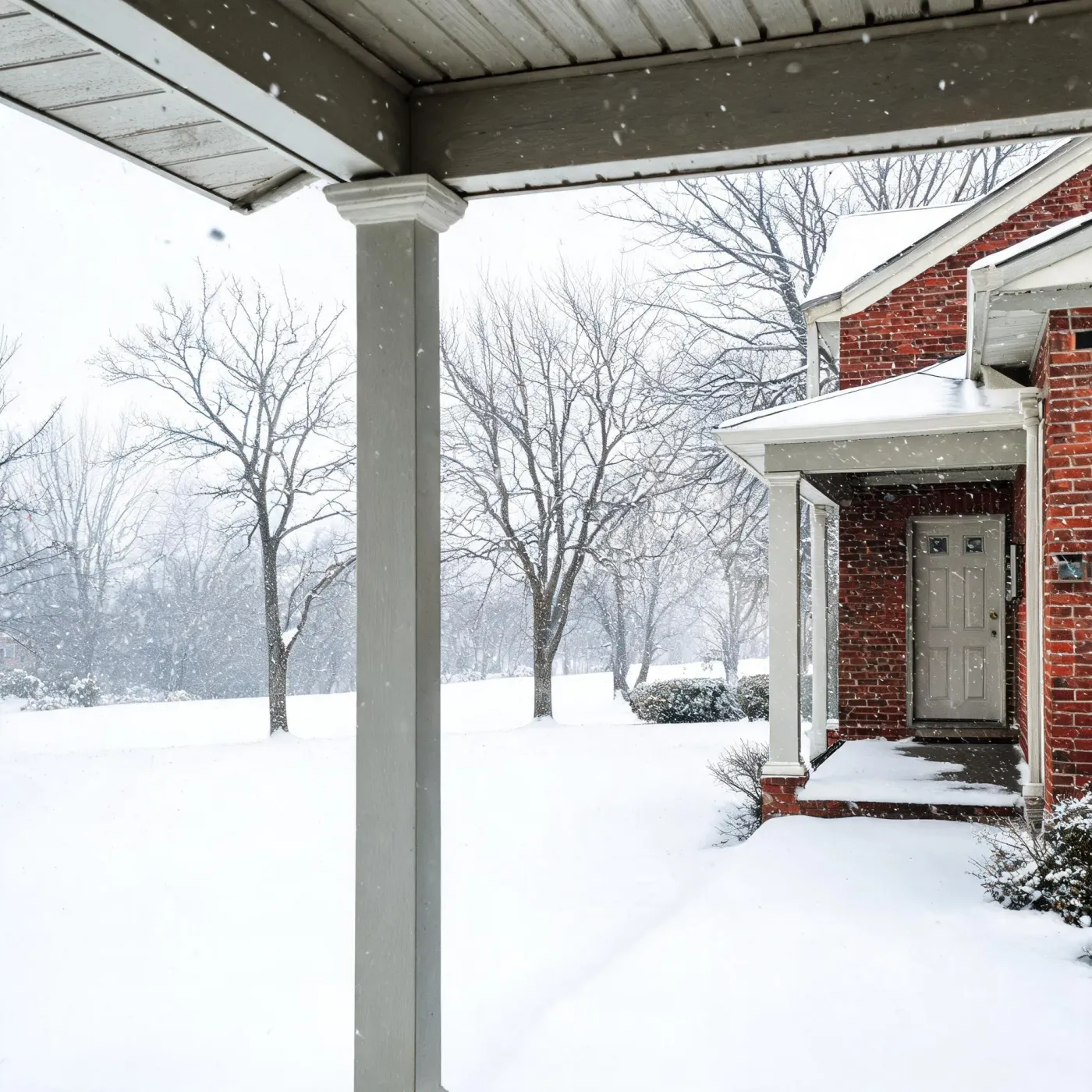
View from under a covered porch with a white column toward a red brick house entrance with a gray door, surrounded by deep snow, bare trees, and falling snowflakes.

Winter nights average 15°F statewide, and that cold changes how long your furnace runs. Oil-fired systems built for New Hampshire winters are sized to push a lot of warm air through the ducts for hours at a stretch on nights that cold, not for quick ten-minute bursts. A whistle that was easy to miss in October gets a lot louder once the blower is working that hard for most of the night. If a filter is choking the airflow or a panel's not sealing right, the extra strain shows up as a sound you can hear from another room, not just a faint hiss near the unit.

NOAA nClimDiv 1991-2020 county normals weighted by homes

A woman in a cream cardigan and jeans stands with one hand raised facing an open front door of a gray horizontal-siding house, with a black lantern wall light, a potted shrub with yellow flowers, and a stone-faced porch column.

A whistle is air telling you where it's being forced through

The sound itself is simple. Somewhere between the blower and the vent in your hallway, air is squeezing through a space narrower than it should be, and that narrow space is worth finding before another cold stretch puts hours of runtime on it. A filter, a panel, a duct joint. Whichever one it is, it's a fixable thing, not a sign your furnace is wearing out.

What you need next is someone who'll actually look, not guess over the phone. A local contractor who works on oil-fired furnaces through New Hampshire winters knows which of these it usually turns out to be in a house like yours, and once you're matched, that's the one contractor who calls you, not three or four companies competing for the job.

A living room corner with a beige upholstered armchair holding navy and striped cushions, a small round wooden side table with a carved bowl and a potted green plant, a framed landscape picture on a pale wall, built-in shelving, and a curtained window.
Sunlight falls across a beige upholstered sofa with a textured woven cushion and a chunky knit throw, beside a dark wood cabinet holding a ceramic vase with green leafy branches, near a white-framed window.
A sunlit corner of a room with a wooden side table holding a ceramic vase of green foliage and a wooden bowl, beside a light upholstered sofa with a knit throw and rust-colored pillow, with window shadows cast on a beige wall.
A sunlit room corner with beige walls, a white-framed window with sheer cream curtain, wood floor with a light rug, and a woven basket holding a knit blanket.
A beige ceramic vase holding a leafy green branch sits on a wooden cabinet in a corner, with sunlight through a sheer curtain casting leaf shadows on the wall.
A grey upholstered sofa with a rust-orange velvet cushion and a textured throw sits beside a window with linen curtains, next to a wooden side table holding a pale ceramic vase of olive branches.

The right pro for this job

Your request stays with one local pro.

Find a local pro

No charge to send it. You decide if you hire them.






