













Profile view of a bearded man wearing a dark green baseball cap and a dark gray T-shirt against a plain light background.

Why your furnace filter gets dirty fast in New Hampshire

Tune-up, service, or cleaningFurnace or heatingNew Hampshire
Step 1 of 2

What ZIP code is the job in?

Why does my furnace filter get dirty so fast?

You just changed the filter a few weeks ago and it already looks gray. It seems too soon, and you're wondering if something is wrong with the furnace, or if this is just how it goes with an oil furnace running through a New Hampshire winter.

An oil furnace burns dirtier than a gas one, so the filter catches more

Oil combustion leaves more soot behind than gas does, and that soot has to go somewhere. Some of it ends up on the filter, along with the usual dust the furnace pulls in every time it runs. With most homes here heating on oil, that filter is doing more work than it would in a house with a gas furnace, even with the same number of hours running. The furnace runs hardest from November through March, so that's when you'll see the filter load up fastest. A filter that's gray and heavy after a few weeks isn't a sign anything's broken. It's the oil burning the way oil burns.

A gray high-efficiency furnace with two access panels stands in a bare basement corner, connected to sheet-metal ductwork, white PVC vent pipes, and flexible gas and electrical lines.

What an oil furnace puts in the air

An oil furnace burns fuel to make heat, and that combustion leaves behind fine soot. Some of it goes out the flue, but a share of it works into the air near the burner and ends up pulled back through the return. A gas furnace doesn't produce that soot. If your home heats with oil, the filter is catching something a gas system never puts into the air in the first place.

A gas furnace with metal ductwork, copper and yellow gas piping stands against a wall in an empty room with a bare concrete floor.

Why the furnace runs so much

A furnace only pulls air through the filter while it's running, and a New Hampshire winter keeps it running for months at a stretch. Every cycle pulls more dust, pet hair, and that oil soot across the same filter. A filter that would last a season somewhere warmer is doing several times the work here between November and March, which is why it looks gray well before you expect it to.

A man in a dark blue shirt stands in an open front doorway of a stucco and wood-clad house, facing a blond woman seen from behind in the foreground on a stone walkway.

What a dirty filter costs you here

A filter clogged with soot makes the blower work harder to pull air through it. That shows up on the electric side of your bill even though oil is what's heating the house, and power in New Hampshire isn't cheap to begin with. Leave it too long and the furnace runs longer to reach the same temperature, which means more oil burned too.

There's a mechanical cost as well. A starved blower strains the motor, and a furnace working against a blocked filter all winter wears faster than one that isn't. If you'd rather not track this yourself, a maintenance visit gets you matched with a contractor who can look at your specific furnace and filter setup and reach out directly. Once that's sent, you're not the one chasing it down anymore.

A living room corner with a beige sofa and cushion, a round wooden coffee table holding a pale ceramic vase of eucalyptus stems and a wooden bowl, and a curtained window with a potted plant above a latticed radiator cover in the background.
A gray-haired bearded man in a dark coat and scarf dusted with snow stands smiling in a dimly lit entryway with a white front door, a side table with a lit lamp, an oval mirror, and a patterned rug.
An older bearded man in a dark snow-dusted coat and gray scarf stands just inside a dimly lit home entry, with a framed picture, lit table lamp, and an adjoining room with a fireplace behind him, and snow visible through the open door.
A gray-haired, bearded man in a dark snow-dusted coat stands smiling in a dimly lit entry hall with a staircase, a lit table lamp, a framed picture, and a living room visible through a doorway.
An older man with gray hair and a beard, wearing a dark jacket dusted with snow, stands smiling in a dimly lit hallway with lamps and a living room visible behind him.
A gray high-efficiency furnace stands on a concrete basement floor beside sheet-metal ductwork, with white PVC vent pipes and a black flexible line running up to exposed wood floor joists, next to a wood-framed post against a concrete wall.
A clean filter lets the blower pull air through without strain, so the furnace runs the way it's supposed to.
A beige metal furnace with a louvered front panel stands on a concrete floor against a concrete wall, connected to galvanized sheet-metal ductwork and a metal pipe.
A filter packed with soot forces the blower to work harder and lets more of that soot settle inside the furnace itself.

A furnace filter is built to stop dust and pet hair, particles with some size to them. Soot from an oil burner is much finer, and fine particles pack into the fibers differently than coarse ones do. Each time the burner fires, the blower pushes another pass of air, and with it another dose of soot, through that same filter. An oil furnace in New Hampshire can cycle many times a day once winter sets in, so the passes add up fast. Once part of the filter picks up a layer of soot, the air stops moving through it evenly. It finds the fibers that are still clear and pushes through there instead, and that smaller opening clogs quicker than the filter did as a whole. So a filter that's gray after a few weeks isn't failing. It's catching what it can, as fine as that soot is, and some of it is small enough to get past the filter anyway and land on the blower wheel and the burner itself.

Why soot fills a filter fast

  • Soot particles are smaller than the dust and pet hair a filter is usually rated to catch, so they load up the fibers fast.
  • Every pass of air through the blower carries another small dose of soot onto the filter, and an oil furnace cycles on and off many times a day through a New Hampshire winter.
  • A standard furnace filter is meant to protect the blower and coil, not to scrub smoke, so it fills with a thinner margin before it's actually clogged.
  • Once soot coats part of the filter, air funnels through whatever fibers are still open, and that smaller area clogs even faster.
  • A filter that looks gray after a few weeks is doing its job correctly, not failing early.
  • The same soot that's too fine for the filter to catch easily is also fine enough to drift past it and settle on the blower wheel and burner.
An older beige furnace with louvered front panels stands on a concrete basement floor beside galvanized ductwork, metal and plastic pipes, exposed wood framing, and a cylindrical water heater at right.
Before you get your furnace maintenance
A gray high-efficiency furnace in a basement with PVC vent pipes, sheet-metal ductwork, copper and insulated pipes, a water heater at left, and an unfinished wood-stud wall at right.
After you get your furnace maintenance

A pro who works on furnaces

An oil furnace that's loading its filter fast is usually just doing what oil furnaces do, but it's worth having someone check rather than guessing. A tech can tell you in one visit whether the soot buildup you're seeing is normal for your system or a sign the burner needs adjusting, and clean out what's already settled inside the furnace before it affects anything else. That matters more here, since a blower working overtime shows up on an electric bill that's already higher than most of the country pays. You don't have to track down who does this kind of work or wait on hold to get someone out. Send the request and a contractor who handles oil furnace maintenance in your area will reach out to you. One less thing to sort out before the cold months are back and the furnace is running every day.

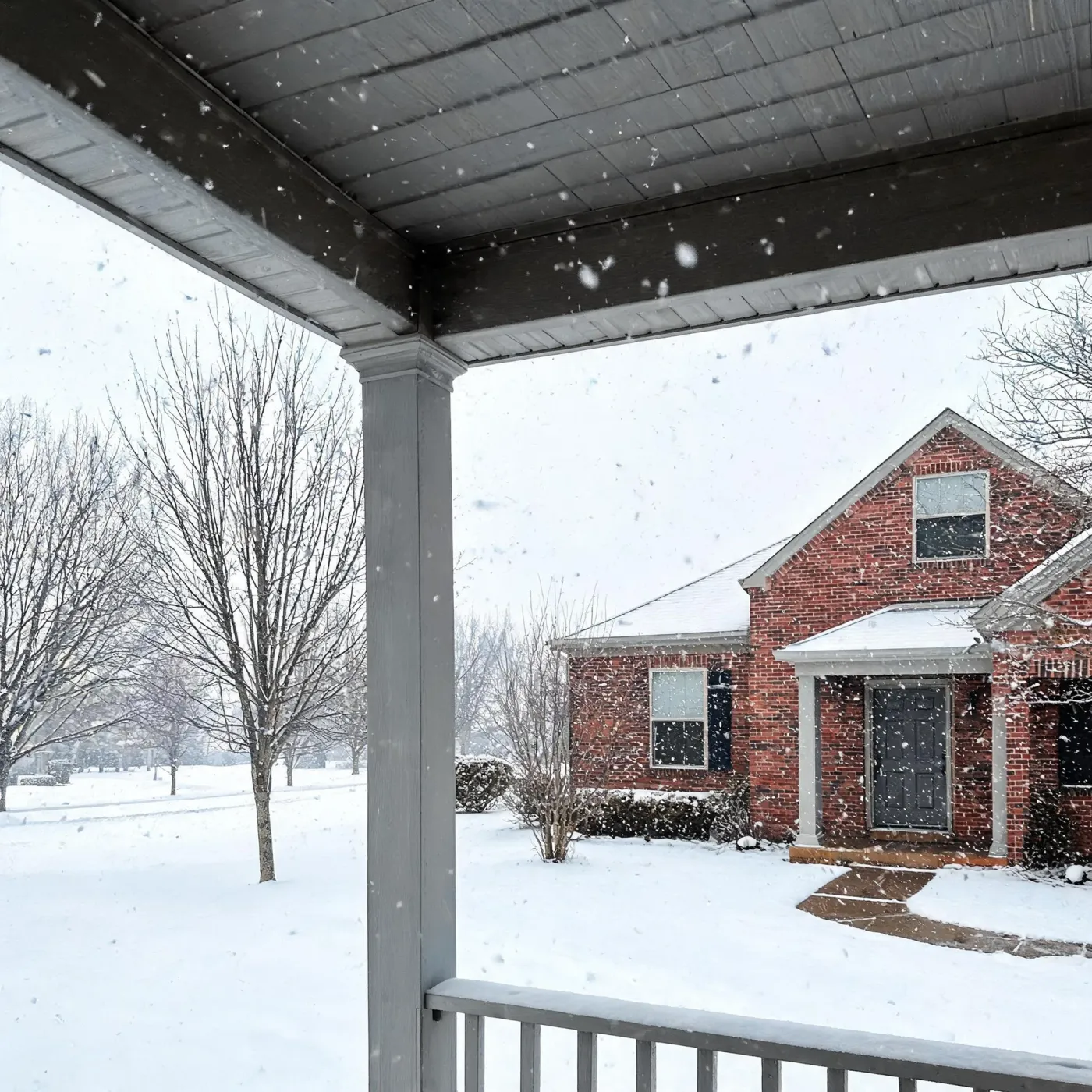
View from a covered porch with a white post and railing toward a red brick house across a snow-covered yard, with falling snow and bare trees.

Winter nights across New Hampshire average 15°F, according to NOAA climate data. At that temperature your furnace isn't cycling on and off anymore. It's running long stretches just to hold the house steady, and every one of those long runs is pulling air, and the soot riding in it, through the filter. A furnace that might run for a few minutes at a time in October can end up running most of the night in January. More runtime means more air passes, and more air passes means the filter loads up faster than it did just weeks before. This is the stretch of the year when a filter that looked fine at Thanksgiving can look packed by New Year's.

NOAA nClimDiv 1991-2020 county normals weighted by homes

Get It Checked or Keep Guessing

Skip the checkup

  • You keep swapping filters every few weeks but never find out why the soot builds up so fast in the first place.
  • Soot that doesn't get cleared out at the burner keeps working its way onto the blower wheel and the heat exchanger surfaces.
  • A blower working harder every day to pull air through a loaded filter runs up the electric side of your bill all winter.
  • Without a tech looking at the burner and the flue, you can't tell if your furnace is running clean or producing more soot than it should.
  • You end up guessing whether a filter change every two weeks is normal for an oil furnace or a sign the burner needs attention.

Get it checked

  • A tech can look at the burner flame and flue to see if your furnace is producing more soot than a well tuned one should.
  • Cleaning the parts where soot collects, the blower wheel, the burner assembly, means less of it ends up back on your filter.
  • Once the furnace is running the way it should, you'll know whether frequent filter changes are just part of owning an oil furnace or were a sign of something off.
  • A furnace that isn't forcing its blower to fight through soot buildup costs less to run on the electric side.
  • Sending in the form means a contractor reaches out to you, so you stop guessing and get an answer about your specific furnace.
A gray high-efficiency furnace with white PVC venting pipes stands on blocks in a basement next to sheet-metal ductwork, with exposed wood framing on the left and a concrete wall and floor.

Running clean

This is what a furnace looks like when the burner is tuned and the flue is drawing the way it should. The ducts, the condensate lines, the gas lines all sit where they belong, and the air coming off that unit is carrying a lot less soot into your filter.


An older gas furnace with two white PVC vent pipes stands on a concrete basement floor beside galvanized sheet-metal ductwork, flexible conduit, and piping along a wall.

Running dirty

Same basement setup, older cabinet, and the burner isn't getting checked. An oil furnace in this shape throws off more soot with every cycle, and that soot has to go somewhere. Most of it ends up on the filter you just replaced.

What are you noticing around the house lately?

Check the return grille and you'll probably find a gray film on it that wasn't there last fall. Dust on the furniture seems to come back within days of cleaning. If you run a hand along the top of a door frame or a windowsill, it comes away dark. Some households notice a faint oily smell near the furnace room, especially right after it kicks on. None of this means the furnace is failing. It's what an oil furnace does over a long winter when the filter isn't keeping up with the soot. Left unchecked long enough, that soot has somewhere to go besides the filter, and that's the part worth having someone look at.

A beige high-efficiency furnace stands on a concrete basement floor beside sheet-metal ductwork, with white PVC vent pipes, flexible conduit and copper and steel piping running up a concrete wall to an electrical box.

Burner tuned right

A furnace burning fuel the way it should sends most of its soot out the flue instead of into the house. The ducts and gas lines sit where they belong, the condensate line drains clean, and the air coming back through the return carries only the normal dust a home makes on its own.

An older gas furnace with a louvered front panel stands on a concrete basement floor beside large sheet-metal ductwork, a metal flue pipe, copper piping and wood framing.

Burner off and neglected

Dust has settled thick around the base of this one, a sign the burner hasn't been checked in a while. When a burner runs rich, more soot gets made at the flame, and more of it finds its way back through the ducts and onto the filter than a tuned burner would ever put there.

Winter nights average 15°F statewide

At 15°F the furnace is running long stretches, not short bursts, to keep the house at temperature. Longer runs mean more air pulled through the filter and more soot carried with it. That's why a filter changed in November can look done by Christmas.

NOAA nClimDiv 1991-2020 county normals weighted by homes

A filter that grays out fast isn't a sign you did something wrong. It's what happens when an oil furnace runs hard through a New Hampshire winter, pulling soot through that filter night after night at 15°F. The filter is doing its job. The question worth answering is whether the burner and flue are doing theirs, because that's what decides how much soot is reaching the filter in the first place. A tuned burner sends most of it out the flue. One that's drifted out of tune sends more of it your way, onto the filter, the blower wheel, the heat exchanger. You don't have to keep guessing at that from the color of a filter. Once you send the form, you're done hunting for someone to check it. A contractor who knows oil furnaces takes it from there, and the soot, the filter, the bill it's been running up all stop being your problem to puzzle out alone.

A wooden front door with six small glass panes and a narrow sidelight, set in a shingled house entry with white trim, reached by stone steps flanked by a planted urn with purple flowers and leafy branches in the foreground.
Exterior corner of a house with beige horizontal lap siding and a black-framed window, with white hydrangeas, ornamental grasses and low plantings along a flagstone patio.
Corner of a house with tan lap siding and a window, a brick step edge, flowering white hydrangeas and green shrubs beside a flagstone walkway leading to a white picket fence and a tree in backlit sunlight.
House exterior with cream horizontal lap siding, a dark-framed window, a black wall lantern beside a wood door, potted shrubs on stone steps, and white and pink hydrangeas in the foreground garden.
Corner of a cream lap-sided house with a white-framed window and dark shingled roof, beside a white-flowering hydrangea shrub, a clipped hedge, mulched bed and lawn.

Get your furnace to the right pro

Send the form and the furnace tune-up stops being something to remember.

Get a local pro

No charge to send it. You decide if you hire them.





