A dark gray furnace with two access panels stands in a basement, connected to galvanized sheet-metal ductwork and PVC pipes, with exposed wood framing and a bare bulb light in the background.

A local pro for your furnace maintenance

Why your house is dry with the heat on in New Hampshire

Cold outside air holds almost no moisture, and your furnace doesn't add any back as it heats that air. That's what's drying out your skin, your sinuses, the wood floors. This page gets into why oil furnaces run so much through a New Hampshire winter and what that does to the air inside, plus how to find a contractor who can look at your specific setup instead of guessing over the phone.

Get matched

Cold air can't hold much moisture to begin with, and a furnace only heats that air, it doesn't add any humidity back into it. So the air moving through your ducts stays just as dry as it was outside, now at 68 or 70 degrees, and that warm dry air pulls moisture out of everything it touches, your skin, your sinuses, the wood trim around the house. The dryness gets worse the harder your furnace runs, and in New Hampshire that means a long stretch, oil furnaces here often run from October into April. A furnace that's short-cycling or has a cracked heat exchanger can make the air feel even drier than it should, because it's working harder and longer to hold the same temperature. If your house feels noticeably drier once the furnace kicks on for the season, that's normal for the setup, but it's worth having the system checked rather than assuming a whole-house humidifier is the only answer.

A gray residential furnace with two panel doors stands against a plain light wall in a concrete-floored room, connected to metal ductwork and white and copper pipes.

How the oil furnace factors in

An oil furnace heats air hotter than a lot of other systems before pushing it through the ducts, and hotter air can pull even more moisture out of your skin and the wood in your house. It runs in short bursts through a cold New Hampshire night, but each cycle is pulling in that same bone-dry outside air and heating it again. None of that adds humidity back. It just moves dry air around the house faster.

A gray high-efficiency furnace with white PVC venting pipes stands against a plain wall in a basement, connected to sheet-metal ductwork on a concrete floor.

Why a tune-up still matters

Dry air itself isn't something a furnace tune-up fixes. But a furnace working harder than it needs to, because of a clogged filter or a dirty blower wheel, moves more air through the house to hit the same temperature, which means more of that dry air passing through every room. Keeping the furnace running the way it was built to run won't add moisture back, but it keeps the problem from getting worse than it has to be.

Will running a humidifier mess up my furnace or ducts?

You've thought about adding moisture back into the air, but you're not sure if it's smart to send water vapor through the same ducts your oil furnace uses to heat your house. It seems like it could cause rust somewhere, or make the furnace work differently than it's supposed to.

No, not if it's sized and installed right

A humidifier built for the job connects to your ductwork or your furnace directly, and it's set to add only as much moisture as the air can hold at that temperature. Too much is what causes problems, condensation on cold windows, moisture inside the ducts near the furnace, which can lead to rust over time. That's why sizing it to your house matters, not just picking one off a shelf. A contractor who services furnaces in New Hampshire can set the humidistat correctly and check the ductwork for the right spot to tie in. Left unchecked, a cheap or oversized unit is the thing that causes the trouble, not the idea of running one at all.

A woman in a gray turtleneck sweater stands by a window looking outside at snowy ground, with a dimly lit living room containing a sofa, shelves, lamp and a lit candle behind her.
A woman in a cream cable-knit turtleneck sweater stands in a warmly lit living room with a fireplace and shelves behind her, looking out a window toward snow-covered trees and a railed deck.
A woman in a cream knit turtleneck sweater stands by a window looking out at snow, with a lit fireplace, sofa and lamp in the room behind her.
A woman in a gray knit sweater sits by a window looking out at falling snow, with a dimly lit living room containing a sectional sofa, pillows, a lamp and houseplants behind her.
A man seen from behind raises his hand to wave at a woman standing in the open front doorway of a single-story house with gray shingle siding, white columns and a gabled porch entry.

What this dry air is doing to your house

You've probably felt the static shocks on doorknobs, or noticed a nosebleed that wouldn't have happened in July. Look closer and you'll likely find gaps opening up between your hardwood floorboards, or a crack starting in a cabinet door or a piece of trim. Wood gives up moisture to dry air the same way your skin does, and it shrinks when it does. A guitar or piano in the house will go out of tune faster than it should. None of this is dramatic on its own, but over a winter of an oil furnace running in short bursts, it adds up.

A technician who services your furnace regularly is in a good position to tell you whether a whole-house humidifier makes sense for your ductwork, since that depends on how your system is set up and what it can handle. If you'd rather not spend time calling around New Hampshire contractors and explaining your furnace setup over and over, getting matched with one who already knows this kind of work means that conversation only happens once.

A gray upholstered sofa with a textured cushion sits beside a dark round side table holding a vase of green foliage, with a table lamp and sheer-curtained window behind.
A gray high-efficiency furnace in a basement with PVC venting pipes, a yellow gas line, metal ductwork, concrete walls and floor, and a wood-framed stairway at left.

Furnace running clean

A furnace in good shape fires, heats the air, and shuts off without you noticing any of it. The burner lights on the first try, the blower moves air evenly through the plenum, and nothing rattles or smells off. Dry air is still dry air, but at least the furnace itself isn't adding another problem on top of it.


A beige furnace with a louvered front panel and metal ductwork stands on a concrete basement floor beside pipes and a white cylindrical water heater.

Furnace under strain

An older furnace working against a dry house tends to show it: longer burn cycles, a burner that takes a second try to light, dust pulling in around the cabinet seams. None of that fixes the dryness, and a furnace straining to keep up runs more often, which only pulls more moisture out of the air it's heating.

A bearded man in a plaid flannel shirt stands in a kitchen looking out a window toward snow-covered shrubs, with a steaming mug on the windowsill and potted plants on a shelf behind him.
A smiling man with dark curly hair in a navy t-shirt sits on a gray couch indoors, with a large-leafed plant and a window in the background.

Get the right pro for your furnace

Answer a few questions instead of calling shop after shop.

Sending the form costs nothing.

A furnace in a dim basement with a dirty pleated air filter partially pulled out of its slot, beside a water heater and concrete walls and floor.

You're down in the basement on a Saturday afternoon in October, the light from the small window already going thin. You pulled the furnace filter to check it before the cold really sets in, and it's grey, matted with the kind of dust that only builds up once the blower's been running steady. You slide it back out another inch, turn it toward the bulb overhead. The air down here feels dry on your hands already, the oil furnace having kicked on twice since you came down. You make a note to grab a new filter this week, then head back upstairs before the next cycle starts.

Humidifier or leave the air dry

Add a humidifier

  • A whole-house humidifier mounts on the ductwork and adds moisture to the air your furnace already heats, instead of leaving that job undone.
  • It runs off the same ductwork your oil furnace uses, so it needs a contractor to set the right output for your house and your furnace's cycle.
  • Static shocks, dry sinuses and gaps in the hardwood floorboards ease up once there's moisture in the air moving through the house.
  • It's another piece of equipment tied to your furnace, which means another thing that needs checking during a maintenance visit.
  • Set wrong, it can push too much moisture into the ducts, which is its own problem in a cold New Hampshire basement.

Leave it as is

  • No new equipment, no install, no additional cost beyond what you already pay for oil and electricity.
  • The dry air keeps pulling moisture out of your skin, your sinuses and the wood floors all winter, same as it's doing now.
  • Cracks in woodwork and gaps between floorboards tend to open wider the longer the house runs dry.
  • Static shocks off doorknobs and light switches keep happening until the air outside warms back up in spring.
  • Nothing changes about how your furnace runs or what a maintenance visit covers, so there's one less thing to keep track of.
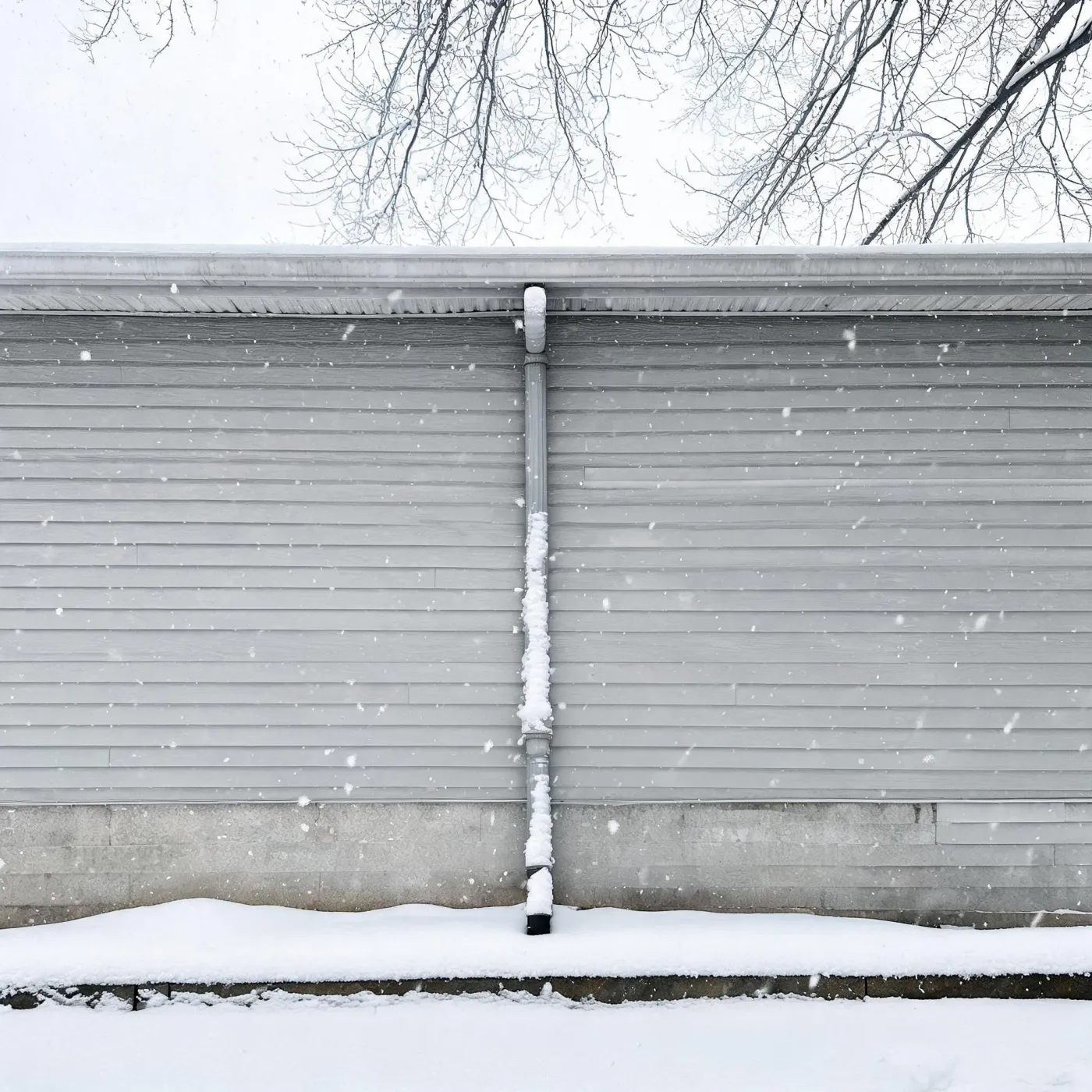
Gray horizontal lap siding on a building above a concrete block foundation, with a central downspout partly coated in snow, falling snowflakes, snow-covered ground, and bare tree branches against a white sky.

Winter nights average 15°F statewide, according to NOAA climate data, and that's the air your furnace is working with before it even starts heating. Air that cold holds almost no moisture, so once your furnace warms it up, it's drier than anything you'd feel in summer even with the heat running steady. You'll notice it most overnight, when the furnace cycles on and off for hours while you sleep. Skin feels tight by morning, your throat's dry, maybe a nosebleed you wouldn't get any other time of year. A quick maintenance check can catch a cracked heat exchanger or a dirty blower before either one makes the dry air worse, or costs you more to run.

NOAA nClimDiv 1991-2020 county normals weighted by homes

A gray high-efficiency furnace stands on a concrete basement floor beside galvanized sheet-metal ductwork, with white PVC vent pipes, gas and water lines, and unfinished wood framing behind it.
A furnace running right heats evenly and quietly, with nothing to smell or hear beyond the burner catching and the blower moving air through the ducts.
A beige furnace with two louvered front panels stands on a concrete basement floor beside galvanized ductwork, metal pipes, and a wooden post.
A furnace in trouble can crack, rattle, or short-cycle, and a maintenance check catches that kind of wear before a cold snap turns it into a no-heat call.

Winter nights average 15°F statewide

That 15°F average is the overnight low, not the cold snaps, so your furnace is working against that most nights from December through February. The air it's pulling in and heating is about as dry as it gets, which is why the house feels drier the longer a cold stretch runs.

NOAA nClimDiv 1991-2020 county normals weighted by homes

Dry air, and what to do about it

  • Cold air holds little moisture, and your oil furnace heats it without adding any back, so the air coming through your vents stays dry all winter.
  • Dry air gets worse the longer a cold stretch runs, since your furnace is cycling on more and pulling in that same dry outside air night after night.
  • A humidifier mounted on your ductwork is the direct fix, but it needs a contractor to size it and tie it into your furnace correctly.
  • Skipping the search, the calls, and the repeat explanations means getting matched with a contractor who already knows what your house needs.
  • Static shocks, nosebleeds, and gaps opening between floorboards are what that dry air leaves behind once the cold settles in for good.
  • A furnace in good working order still won't add moisture back on its own, so the dryness itself isn't a sign anything's wrong with it.

Your oil furnace isn't broken. It's heating air that came in dry and leaving it that way, because heating air doesn't put moisture into it. That's true of every furnace, running right or not, so the dryness you're feeling isn't a warning sign about the equipment itself. It's just what a New Hampshire winter does to the air in your house, night after night, for months.

What you do about it is separate from what's causing it. A whole-house humidifier mounted on your ductwork solves the dryness by adding moisture back as your furnace moves air through the house. But it has to be sized to your system and tied into your ducts correctly, which isn't something to guess at. That part takes a contractor who knows what they're looking at.

Finding that contractor is usually its own chore. Searching around, calling a few numbers, explaining the same thing about your furnace and your ducts to each one, then sitting with quotes that are hard to compare because nobody asked the same questions. Getting matched with a contractor who already knows what a house like yours needs skips that part entirely. You still get the same conversation about your furnace and your ducts, you just have it once, with someone who's already equipped to answer it.

The cold isn't letting up through February, and the air moving through your vents will keep pulling moisture out of your skin, your floors, your sinuses until something adds it back in.

At dusk, a dark board-and-batten house with a standing-seam metal roof and lit entry walkway of stone pavers, with two large outdoor heat pump units on a stone-walled pad at right and trees and hills in the background.

Furnace Maintenance

A pro who works on furnaces

Tune-up, service, or cleaningFurnace or heatingNew Hampshire
Step 1 of 2

What ZIP code is the job in?

  • A ceramic vase holding leafy green branches and a shallow wooden bowl sit on a wooden window ledge beside a sunlit window, with a cream upholstered chair and knit throw in the foreground.
    • A local pro who knows furnaces gets your details and gets in touch.
    • A local pro who services furnaces gets in touch about the tune-up.
  • Sunlit living room corner with a beige upholstered sofa, a round wooden side table holding a ceramic vase of olive branches, linen curtains at a window, a floor vent in the baseboard, and a woven jute rug on hardwood flooring.
    • Once you send the form, finding a pro is off your list.
    • After you send the request, you're done searching.
  • A wooden side table with a single drawer holds a shallow carved wood bowl and a white ceramic vase of green eucalyptus stems, beside a window and an upholstered chair draped with a cream knit throw.
    • Fill out one form instead of calling around for a furnace tune-up.
    • Fill out one short form instead of calling around.
  • Corner of a house with horizontal siding, a white-framed window and stone veneer base, beside a covered entry with wooden steps, a potted plant, mulched beds of green shrubs and a flagstone path.
    • Your request goes to one pro, not a list of companies.
    • The pro who reaches out is licensed in New Hampshire.