
A few months in
If the dust, the smell, or the weak vent comes back within a year of a cleaning, something upstream is still feeding it. That points to a bigger problem than the ducts alone.
Dust coming back on furniture and sills within a day or two of cleaning is the clearest sign your ducts need attention. So is a musty smell when the heat or AC kicks on, which usually means dust or moisture built up inside the system itself, not just the room. Rooms that stay dustier or stuffier than others, despite regular cleaning, often point to ducts feeding them unevenly. With most homes in the Portsmouth area heating on oil, soot and fine ash can also work their way into the duct system over the years and settle in the runs, adding to what gets pushed through the house every time the system runs. If anyone in the house has started sneezing more at home than elsewhere, or allergies seem worse indoors, that is also worth paying attention to. None of this means the ductwork is damaged. It means air is carrying more through the house than it should, and clearing it out is a straightforward fix.




Most homes in and around Portsmouth heat with oil, and oil systems put more fine soot and particulate into the air they move than gas does. That residue settles inside the ductwork over a winter of steady use, and every time the furnace cycles on it stirs some of it back into the air you breathe. If your vent covers show a thin black film when you run a finger across them, that is oil residue, not ordinary dust, and wiping the vent cover will not touch what is coating the inside of the duct runs behind it.
Humidity here climbs through the summer months, and ducts that run cool air through a warm, damp house can collect moisture where the metal sweats. That moisture gives dust somewhere to stick instead of blowing through, and over a few seasons it builds into a coating that holds odor. A musty smell that shows up only when the AC runs, and fades once the system shuts off, points to this rather than to the house itself. Checking the return duct near the air handler for damp or discolored insulation will usually confirm it.
Half the homes here were built by 1983
Half the homes in Rockingham County were built in 1983 or earlier. If yours is one of them, the ductwork has likely never been cleaned.
Heat runs October through May
Heat runs October through May here, about eight months out of the year. That's eight months of oil residue and dust moving through the same ducts.
Cooling runs July through August
Cooling runs July and August. Short as that stretch is, it still pushes summer humidity and dust through ducts that sat closed up all spring.
ACS 2020-2024 · NOAA nClimDiv 1991-2020

Walk room to room with your hand in front of each vent. If one or two push noticeably less air than the others, something inside that branch of ductwork is blocking the flow. It could be a loose connection, but a buildup of dust and debris narrowing the duct is just as likely, especially in a system that has run through several Portsmouth winters without being checked.

If you or someone in the house sneezes or gets stuffy more inside than outside, that points at what the system is circulating. Pollen and outdoor allergens settle in ductwork too, and a humid Portsmouth summer gives mold and dust mites a place to grow inside the vents. Symptoms that ease up the moment you step outside are worth paying attention to.
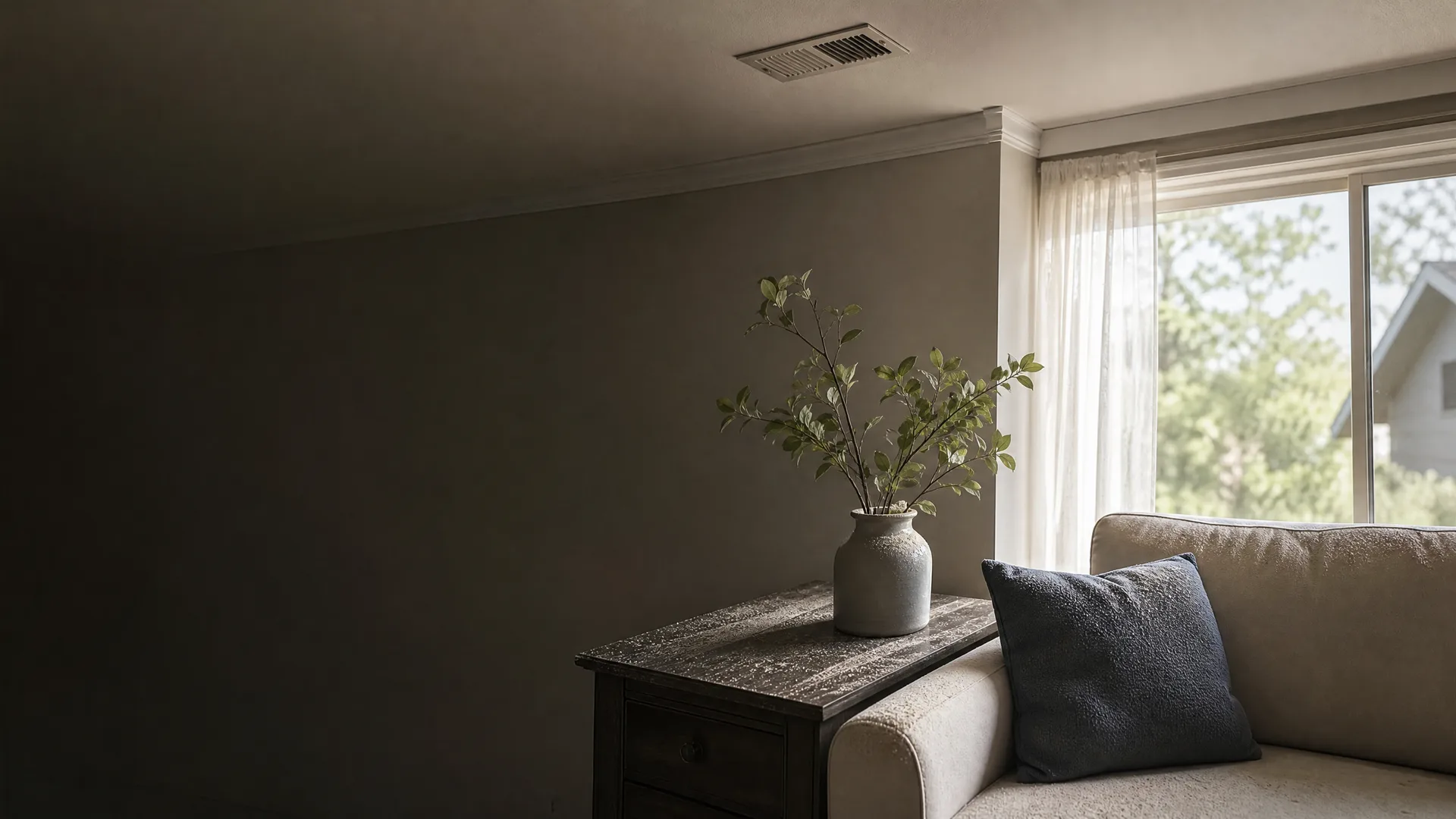
You're dusting the living room on a Saturday in April, windows open for the first time since fall. The light is different this time of year, low and sideways, and it catches what's gathered on the ceiling vent grille: a soft gray fringe along every slat. You wipe it down, then look at the end table and the TV stand underneath and see the same film already sitting there, even though you cleaned this room a week ago. The vent above your head has been breathing that same air into the room all winter, every time the furnace ran. You stand there a second with the rag in your hand, looking up at it.
One request and the search for a pro is handled.
Sending the form costs nothing.
You've had the ducts cleaned before and the house held onto it. Dust stayed down, the smell didn't come back, and the vents ran clean for years before you thought about it again.
This time the same signs showed up again within a year. That usually means something is still feeding the problem, like a leaky return or a filter that isn't holding up its end, worth a look alongside the cleaning.


If the dust, the smell, or the weak vent comes back within a year of a cleaning, something upstream is still feeding it. That points to a bigger problem than the ducts alone.
A duct system that holds onto a cleaning for years means the source got cleared out. Dust stays down, the smell stays gone, and every vent keeps pulling its share.
You wipe down the shelves and the TV stand, and two days later there's another film across both. Allergies that calm down in other rooms flare up again in the bedroom with the big return vent. Someone in the house is sneezing more at home than anywhere else. You check the filter and it's fine, so the dust has to be coming from somewhere upstream of it, which means it's circulating through the ducts themselves rather than getting caught. Left alone, that buildup keeps feeding itself: the system pushes it out, it settles, you clean it up, and the ducts refill the air with more. It doesn't damage the furnace, but it means everyone in the house is breathing it before it ever hits a surface.


A technician seals off each supply and return vent in the house.
A vacuum unit connects to the main trunk line to pull air.
Negative pressure draws loosened debris toward the vacuum collection point.
A brush or air tool knocks soot and dust free inside each run.
At 24.24 cents per kilowatt-hour, running a blower fan or an air handler against clogged, dusty ducts costs more than it should. A system working harder to push air through buildup pulls more power every time it cycles on, and that shows up on your bill all year.
EIA-861 2025

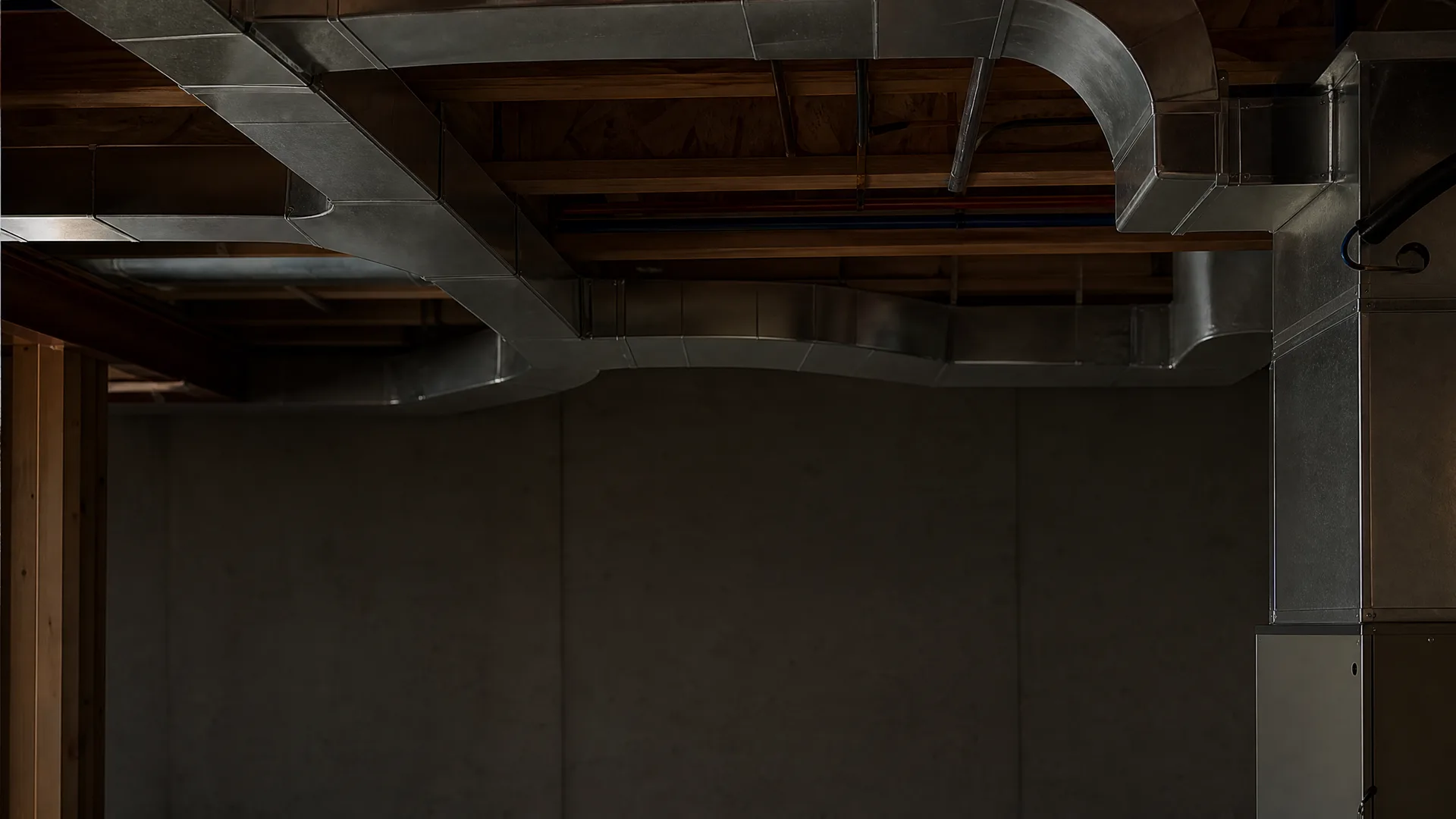
Metal trunk lines and flex runs cross the joists above the furnace, each connection tight and each run clear. Air moves from the furnace through the ducts and out the vents without anything slowing it down along the way.

The same kind of runs cross a basement ceiling here too, boxed plenums and round branch ducts tucked between the joists. Soot and dust sit inside where you can't see them, and every cycle of the furnace pushes more of it out into the rooms above.

Dust back on the sills in a day or two, a musty smell when the furnace kicks on, one vent pushing less air than the rest. Any one of these is reason enough to get the ductwork looked at. All three together, and there's not much question left.
You don't have to figure out which one it is or how bad the buildup has gotten. Send the form and a contractor who works on duct systems in Rockingham County will reach out and take it from there, starting with what you've noticed and going from it.

Send the form and finding a duct cleaner is handled.