
2,000 watts, give or take
That's the spike a furnace blower pulls for a second or two at startup. A generator sized only for the running load won't carry it.
 Match me with a pro
A local installer who puts in furnaces gets your project.
A furnace needs more to start than to keep running. The blower motor draws its highest current the moment it kicks on, and if you're sizing a generator to carry your furnace through a winter outage, that starting draw is the number that matters, not the running watts.
Most oil furnaces here don't need a huge unit to stay running. The burner, the igniter, the blower, none of them pull much compared to a well pump or an electric water heater. But undersize the generator and the furnace will trip it or fail to start at all, which matters more in New Hampshire than most places, since a furnace that won't run means no heat on the coldest nights of the year.
Getting the size right means knowing your specific furnace, the model, the motor, the starting load it actually has, not a rule of thumb off a chart. That's where a local contractor matters more than a generic answer. Someone who installs generators in this area knows what oil furnaces around here actually draw, what else people tend to want covered on the same circuit, and how the local power costs factor into whether you want a standby unit or something smaller you run manually.
Submit your information and you'll be matched with one licensed contractor who serves your area, not a handful of companies competing for your callback. They'll look at your furnace, your panel, and what else you want running when the power goes out, and reach out to walk through what size actually fits your house.
From there, the details are between you and the contractor who shows up to look at your setup.
Oil heat in New Hampshire runs on electricity even though the fuel itself is oil. The burner motor, the igniter and the blower all need power, so when the grid goes down in a winter storm, the furnace goes down with it. You want a generator sized to actually start the thing, not just keep it idling, and you want to know that number before the next outage, not during it.
Most residential oil furnaces draw somewhere between 2,000 and 3,500 starting watts, and that starting draw is what a generator has to clear. A unit rated between 5,000 and 7,000 watts gives you that headroom and still has capacity left for a few lights, the refrigerator, and a well pump if your water comes from one, which matters in a lot of New Hampshire homes outside town water lines. The exact number depends on your furnace's motor, listed on the nameplate or the installation manual. Undersized, the generator stalls or trips every time the blower kicks on. Sized right, it carries the furnace through the outage without you thinking about it again.
Power loss shuts down the burner motor, igniter and blower together
Generator starts and sends power back to the furnace circuit
Blower motor draws its highest current the instant it starts
Igniter glows and the burner motor opens the oil valve


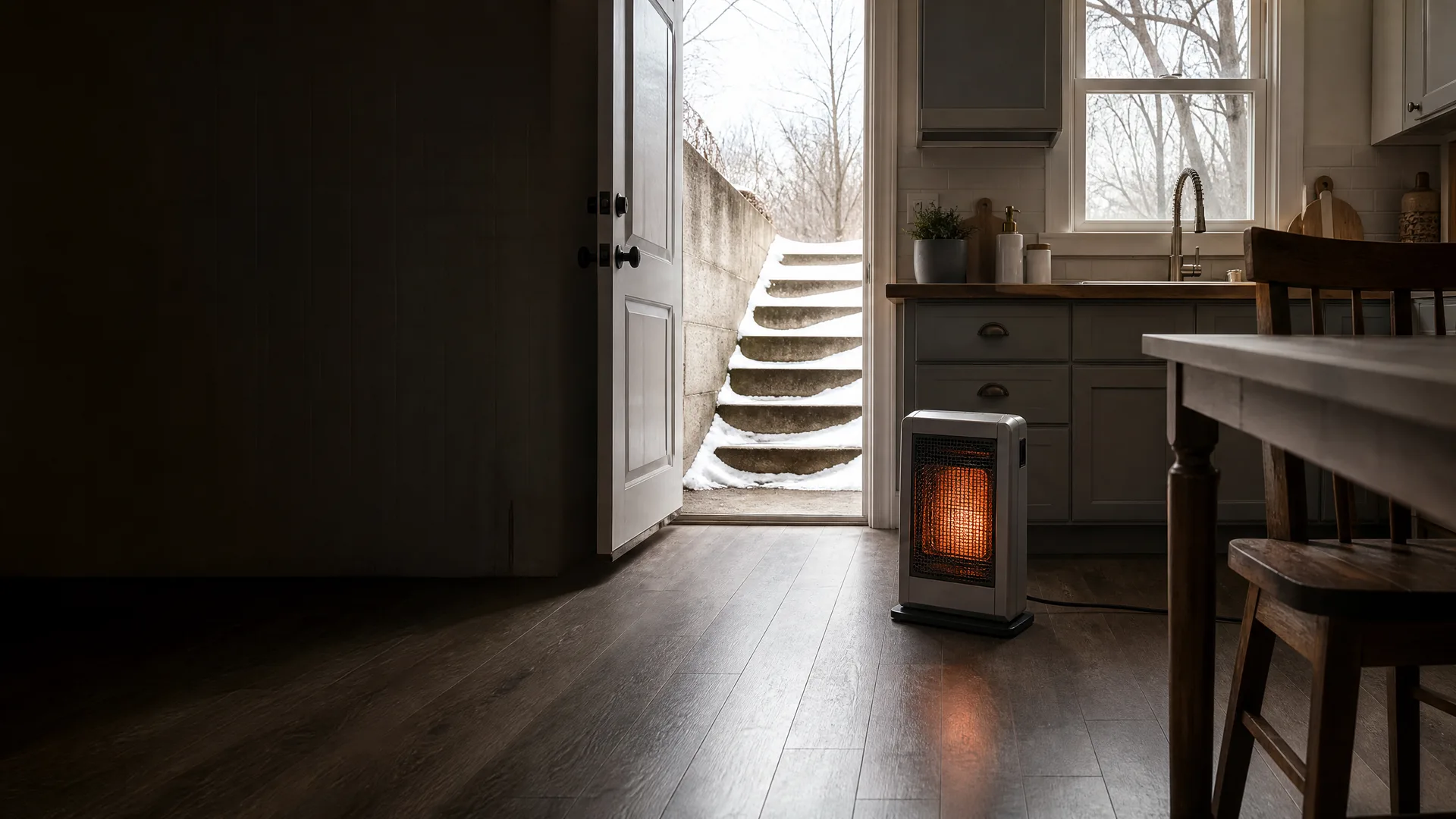
The power's been out since two in the morning. You're up before the kids, standing in the kitchen in your coat, and the space heater you dug out of the closet is the only thing making noise besides the kettle. The basement door is open because you went down twice already to look at the furnace, like looking at it would help. Outside it's still dark and somewhere in the single digits. Your breath shows a little, even in the kitchen. Behind the space heater's orange coil the room stays just warm enough to stand in. Down in the basement, the furnace sits cold and won't be anything but cold until the lines come back or someone sizes a generator to carry it through a morning like this one.
A furnace with the wrong generator picked for it fails in the worst moment, three days into a storm with the oil tank full and no way to light the burner. Getting the size right the first time means knowing your specific furnace, not a generic one, and that's where a local contractor earns the call. Someone who installs standby generators in New Hampshire homes all winter has seen which furnaces trip a 7,000-watt unit and which need more, and they'll size yours against its actual starting draw instead of a guess. You'll hear from one contractor, not a handful competing for your number, and they're licensed to do the electrical work a generator hookup requires. With power rates here among the highest in the country, you also want someone who can size this close rather than oversized out of caution. Send the request now, before the next outage finds you still working it out by hand.
The number on a generator's box that matters is the surge rating, not the running rating. Every furnace blower is an induction motor, and induction motors pull far more current the instant they start than they do once they're spinning. That instant is brief, often under a couple of seconds, but a generator that can't deliver through it will trip its own breaker or stall before the blower ever gets moving. Running watts tell you what the furnace needs once it's going. They don't tell you whether it can start in the first place.
On an oil furnace, the burner motor and igniter fire at nearly the same moment as the blower, so the generator isn't just carrying one motor's startup draw, it's carrying the whole ignition sequence at once. That's a higher bar than a gas furnace with no burner motor to add in.
If the same panel also runs a well pump or a sump pump, check whether either one might cycle on during that same window. Two motors starting together can stack their draws, and a generator sized just for the furnace alone may come up short in that moment. This is also where a whole-home standby unit has an advantage: it's sized with enough reserve that a blower's startup spike barely registers, where a smaller portable unit is working right at its limit.




That's the spike a furnace blower pulls for a second or two at startup. A generator sized only for the running load won't carry it.
The burner motor, igniter and blower all need power to fire the furnace. No power, no heat, even with a full oil tank.
At 15°F, which is about what a New Hampshire night averages in January, your furnace isn't cycling on and off anymore. It's running long stretches to keep up. A generator that can't carry the blower through every one of those startups will leave you cold fast.
NOAA nClimDiv 1991-2020 county normals weighted by homes
A generator sized for your furnace's starting draw, not just its running watts, is what keeps the burner lighting and the blower turning through a January outage. That's the whole answer. Getting there means matching the generator to your specific furnace, which is where a local installer earns the call. Someone working on oil furnaces around New Hampshire all winter has seen which blower motors stall a generator sized too close to the edge, and which panels need a transfer switch wired a certain way to carry the load cleanly. When you request a match, you're connected with one licensed contractor local to you, not a handful of companies competing for the job. That contractor can look at your furnace, your panel and your situation, and size the generator to what you actually have rather than what a chart says a furnace like yours should need. You end up with a setup that holds through the storm instead of tripping out at two in the morning when the blower kicks on.

Your request stays with one local pro.